Blender.io OFAC designation Explained: Implications for Crypto Users
Understanding the Regulatory Landscape
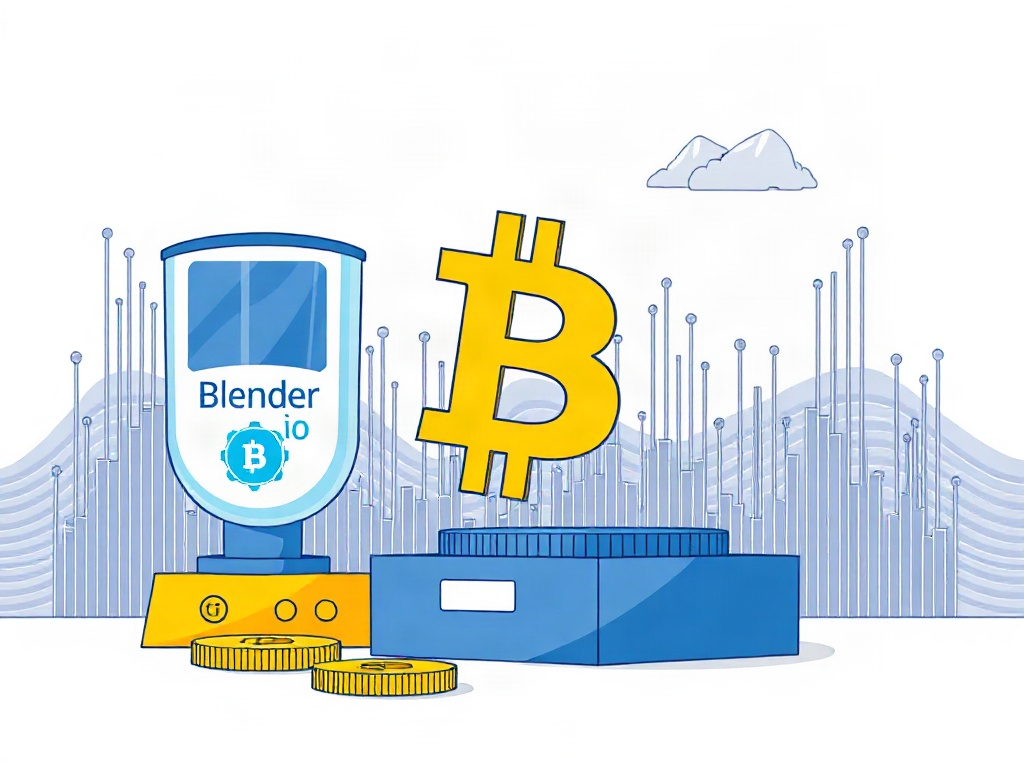
The recent Blender.io OFAC designation has sent ripples through the cryptocurrency community, prompting users, developers, and compliance officers to reassess how decentralized finance (DeFi) platforms interact with U.S. sanctions law. At its core, the designation signals that the United States Treasury’s Office of Foreign Assets Control (OFAC) views certain activities associated with Blender.io as facilitating illicit finance, including money laundering and ransomware payments. This move is part of a broader trend where regulators are extending traditional financial oversight to digital asset ecosystems, aiming to close gaps that have historically allowed anonymity to persist. For many, the term “OFAC designation” evokes images of blacklists and asset freezes, but in the crypto realm it also raises nuanced questions about jurisdiction, enforceability, and the technical feasibility of compliance. By dissecting the regulatory context, we can better appreciate why the Blender.io OFAC designation matters beyond a simple headline.
Key Definitions
Before diving into specifics, it is essential to clarify a few foundational concepts. First, an OFAC designation is a formal designation that places an individual, entity, or activity on the U.S. sanctions list, effectively prohibiting U.S. persons from engaging in transactions with the designated party. Second, “Blender.io” refers to a popular mixing service that aggregates cryptocurrency deposits and redistributes them to obscure the original source of funds. Finally, “designation” in this context does not merely label the service; it legally implicates any U.S.-connected entity or person who facilitates, processes, or benefits from the designated activity. Understanding these definitions helps demystify the legal language that often obscures the practical impact on everyday users.
Historical Context
The practice of sanctioning crypto-related services is not new. Since 2021, OFAC has added several mixers, tumblers, and privacy-focused wallets to its Specially Designated Nationals (SDN) list, citing their role in facilitating ransomware payments and other illicit flows. The Blender.io OFAC designation follows a similar trajectory, reflecting the agency’s growing confidence in its ability to trace on‑chain activity back to real‑world actors. Historically, the U.S. government has relied on court orders and international cooperation to enforce sanctions, but the rapid evolution of blockchain technology has forced a shift toward more proactive, technology‑driven approaches. This historical backdrop underscores how the current designation fits into a larger pattern of regulatory expansion.
Impact on Blender.io Users
For users of Blender.io, the designation carries immediate and tangible consequences. The most direct effect is the restriction placed on U.S. persons from sending or receiving funds through the service. While the protocol itself remains technically accessible worldwide, any transaction that involves a U.S. address, identity verification, or compliance checkpoint can trigger sanctions enforcement. Moreover, the designation has prompted major exchanges and custodial services to delist or block deposits linked to Blender.io, effectively limiting liquidity for many traders. This section explores the practical ramifications for everyday participants, from hobbyist mixers to professional traders.
Transaction Monitoring
One of the most significant operational changes resulting from the Blender.io OFAC designation is the heightened scrutiny of on‑chain transactions. Blockchain analytics firms have begun integrating sanctions‑aware filters into their monitoring tools, flagging any address that interacts with Blender.io’s smart contracts. When a flagged address receives funds, downstream services may automatically freeze the transaction, report it to authorities, or block the address altogether. This monitoring creates a cascade effect: even users who are not U.S. citizens may find their funds frozen if they inadvertently interact with a sanctioned address. The technical complexity of maintaining compliant transaction pathways has therefore become a central concern for the community.
Compliance Measures
In response to regulatory pressure, many Blender.io operators have introduced voluntary compliance mechanisms, such as identity verification (KYC) gates and transaction limits. While these measures aim to reduce exposure to sanctions risk, they also conflict with the core ethos of anonymity that attracted users to mixers in the first place. Some platforms have opted to shut down entirely rather than risk enforcement, while others have pivoted to privacy‑preserving alternatives that claim to be “non‑custodial” and “off‑shore.” The decision to adopt compliance measures involves a trade‑off between legal safety and user privacy, a tension that defines much of the current debate surrounding the Blender.io OFAC designation.
Broader Implications for the Crypto Ecosystem
Beyond the immediate impact on Blender.io, the designation serves as a bellwether for how regulators may approach other DeFi protocols. The crypto ecosystem is built on principles of decentralization and permissionless innovation, yet the Blender.io OFAC designation illustrates that even ostensibly decentralized systems can be subject to targeted sanctions if they facilitate prohibited activity. This reality forces developers to reconsider design choices, such as whether to embed compliance hooks directly into smart contracts or to rely on external monitoring solutions. Additionally, the designation fuels discussions about the jurisdictional boundaries of blockchain technology, as regulators grapple with the challenge of applying traditional legal frameworks to globally distributed networks.
Exchange Responses
Major cryptocurrency exchanges have reacted swiftly to the Blender.io OFAC designation, implementing policy updates that prohibit deposits and withdrawals linked to the mixer. Some platforms have gone a step further, issuing public statements that reaffirm their commitment to sanctions compliance and outlining the technical steps they are taking to detect and block suspicious transactions. These responses not only protect the exchanges from regulatory penalties but also signal to the broader market that adherence to U.S. sanctions is now a baseline expectation. The ripple effect of these actions can be observed in reduced trading volumes for privacy‑focused assets and a shift toward more transparent on‑chain practices.
Future Regulatory Trends
Looking ahead, the Blender.io OFAC designation may herald a series of similar designations targeting other privacy‑enhancing technologies. Regulators are likely to expand their focus to include zero‑knowledge proof protocols, privacy coins, and even layer‑2 scaling solutions that could potentially obscure transaction trails. This trend suggests a move toward a more proactive regulatory stance, where the mere possibility of misuse is enough to trigger scrutiny. For developers and investors, staying informed about emerging sanction lists will become as critical as tracking market price movements, as non‑compliance could result in asset freezes, legal exposure, or loss of access to major trading venues.
Practical Guidance for Staying Compliant
Navigating the regulatory landscape after the Blender.io OFAC designation requires a proactive, informed approach. Users must evaluate their own jurisdictional exposure, understand the technical implications of interacting with flagged addresses, and adopt best practices that minimize compliance risk. The following sections outline concrete steps that can help individuals and businesses align their activities with evolving legal expectations.
Steps for Users
First, conduct a thorough audit of your transaction history to identify any interactions with Blender.io or related addresses. If you discover past deposits or withdrawals, consider documenting the context and seeking legal counsel to assess potential exposure. Second, adopt a “clean‑wallet” strategy: use dedicated addresses for compliant activities and isolate any funds that may have passed through sanctioned services. Third, leverage reputable analytics tools that flag sanctioned addresses in real time, allowing you to pause or reverse transactions before they become problematic. Finally, stay updated on official OFAC communications, as sanction lists are subject to change, and new designations may emerge with little notice.
Tools and Resources
Several third‑party services now offer sanctions‑compliant monitoring dashboards that integrate with popular wallet interfaces. These tools typically provide real‑time alerts when a transaction involves a flagged address, along with guidance on how to proceed. Additionally, open‑source blockchain explorers have begun incorporating OFAC‑aware tagging, enabling users to manually verify the status of addresses. For businesses, implementing a compliance‑by‑design architecture — such as embedding KYC checks at the point of onboarding — can streamline the process of ensuring that all inbound and outbound flows meet regulatory standards. By leveraging these resources, users can mitigate risk while preserving as much of the intended privacy and freedom of the crypto ecosystem as possible.
In summary, the Blender.io OFAC designation represents a pivotal moment where regulatory enforcement meets decentralized technology. By understanding the legal framework, recognizing the practical impacts on users, and adopting proactive compliance measures, participants can navigate this complex environment with confidence. Whether you are a casual mixer user, a developer designing privacy‑preserving protocols, or an institutional investor assessing risk, the lessons learned from this designation will shape the future trajectory of crypto regulation and innovation.

Understanding the Blender.io OFAC Designation: Regulatory Impact on Crypto Investors
As a crypto investment advisor with over a decade of experience, I view the Blender.io OFAC designation as a pivotal moment that underscores the growing scrutiny of decentralized mixing services by U.S. authorities.
From my perspective, this designation signals that regulators are increasingly targeting privacy‑enhancing protocols, which can affect liquidity, market perception, and the legal risk profile of assets associated with such platforms.
Practically, I advise clients to reassess exposure to services flagged by OFAC, incorporate robust compliance checks, and consider diversifying into compliant alternatives while monitoring enforcement trends to mitigate unforeseen regulatory fallout.