BTC mixer vs XMR swap: A Comprehensive Guide to Privacy Tools in Cryptocurrency
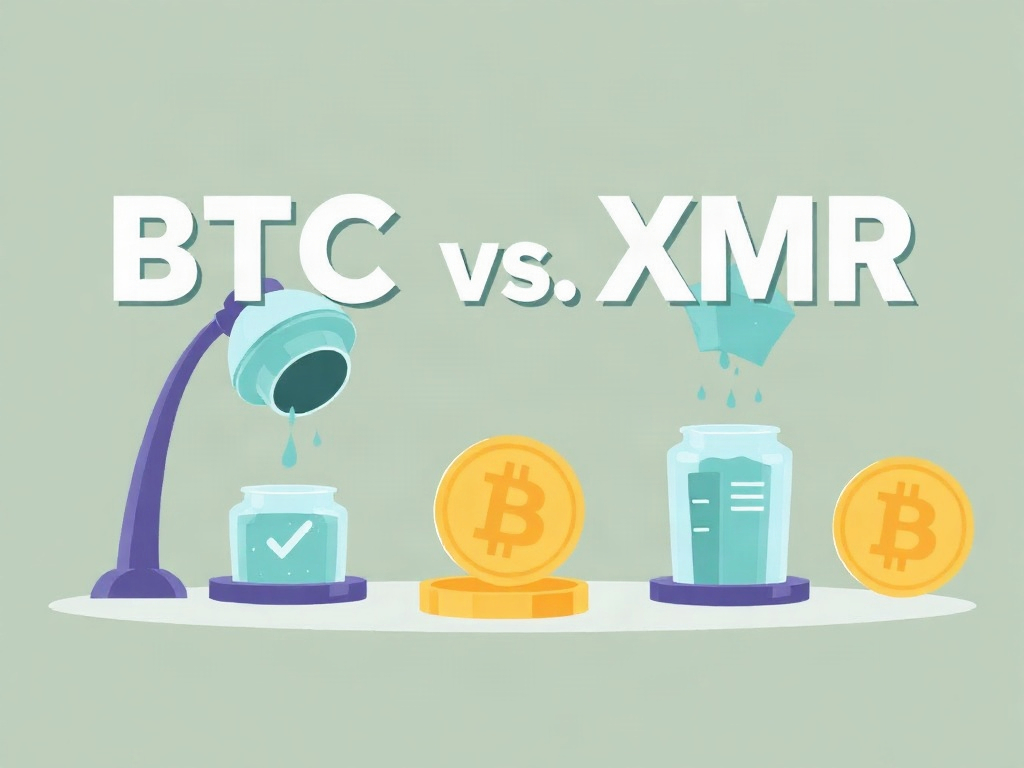
In the evolving landscape of digital finance, privacy remains one of the most compelling reasons users seek alternatives to transparent blockchain networks. Bitcoin (BTC) transactions are publicly traceable on the ledger, while Monero (XMR) offers built-in confidentiality through ring signatures, stealth addresses, and confidential transactions. This has led to a frequent comparison between two distinct approaches: using a BTC mixer versus executing an XMR swap. Understanding the mechanics, benefits, and risks of each method is essential for anyone prioritizing financial discretion in their crypto activities. In this article, we’ll dissect the BTC mixer vs XMR swap debate, exploring how they work, where they differ, and which might suit your specific privacy needs.
The term BTC mixer vs XMR swap often appears in discussions about obfuscating transaction trails, but the underlying philosophies differ significantly. A BTC mixer, also known as a tumbler, is a service that pools together multiple users' coins and redistributes them in a way that breaks the on-chain link between sender and recipient. An XMR swap, on the other hand, typically refers to an atomic swap or direct exchange between BTC and XMR, leveraging Monero’s native privacy features to shield the origin of funds. Both aim to enhance anonymity, but they operate on fundamentally different technical models.
How BTC Mixers Work
Centralized Mixers vs Decentralized Mixers
Centralized mixers operate as third-party services that accept BTC from multiple users, shuffle the funds internally, and send them to designated output addresses. Users trust the operator to not log their transactions or abscond with the pooled assets. While convenient and often faster, centralized mixers introduce a single point of failure and potential regulatory scrutiny. The BTC mixer vs XMR swap conversation frequently highlights this trade-off: convenience versus trustlessness.
Decentralized mixers, by contrast, leverage smart contracts or peer-to-peer protocols to mix funds without a central authority. Protocols like CoinJoin enable users to collaboratively create transactions where inputs and outputs are indistinguishable from one another. This approach aligns more closely with the ethos of decentralization, though it may require higher technical expertise and can be slower to coordinate. Both types aim to break the deterministic flow of BTC on the public ledger, but their risk profiles vary considerably.
Mixing services often charge a fee, typically ranging from 1% to 3% of the transaction amount. Some offer time-delay features to further obfuscate timing analysis, while others provide customizable output distributions. However, users must remain vigilant about AML (Anti-Money Laundering) compliance, as some jurisdictions have begun scrutinizing mixer usage more intensely.
Understanding XMR Swaps and Monero’s Native Privacy
Atomic Swap Mechanics
An XMR swap involves the exchange of BTC for Monero (or vice versa) using atomic swap technology, which ensures that the transaction either completes fully on both sides or not at all, eliminating counter-party risk. These swaps can occur via on-chain atomic swaps, which require compatible hashlocks and timeouts, or through off-chain solutions and decentralized exchanges (DEXs) that support Monero liquidity. The result is that the user receives XMR, which inherently possesses strong privacy guarantees due to the Monero protocol’s design.
Monero’s Native Privacy Features
Unlike Bitcoin, where privacy must be added through external tools, Monero’s architecture obscures sender, receiver, and transaction amount by default. Ring signatures mix the spender’s transaction with several others, making it computationally infeasible to determine the true origin. Stealth addresses generate one-time public keys for each transaction, ensuring that only the intended recipient can identify the incoming funds. Confidential Transactions further mask the amount being transferred. When performing an BTC mixer vs XMR swap, the Monero side of the equation already provides a high baseline of confidentiality, which many users find more robust than post-hoc mixing.
Atomic swaps between BTC and XMR thus serve as a bridge: users can exit the transparent Bitcoin ecosystem entirely and enter a privacy-first environment. This approach eliminates the need for a separate mixing service, as the Monero chain handles obfuscation natively. However, the swap process itself may leave traces on the Bitcoin side, depending on the method used.
Liquidity for BTC-XMR swaps varies by platform. Centralized exchanges may offer simple BTC-to-XMR conversions but often require KYC (Know Your Customer) verification, undermining privacy goals. Decentralized platforms or peer-to-peer marketplaces can provide more discretion, though users must evaluate the trustworthiness of counterparties. The choice between a BTC mixer vs XMR swap often hinges on whether the user prefers a one-time privacy enhancement via mixing or a permanent shift to a privacy-centric asset.
Key Differences Between BTC Mixers and XMR Swaps
When evaluating the BTC mixer vs XMR swap dilemma, several critical factors come into play:
- Privacy Model: BTC mixers rely on external obfuscation after the fact, while XMR swaps leverage intrinsic protocol-level privacy. Monero’s design means every transaction is private, whereas a mixer’s effectiveness depends on the service’s implementation and user behavior.
- Trust and Centralization: Many mixers are centralized entities requiring trust in the operator. Atomic swaps, especially those conducted via non-custodial DEXs or protocols, can be trustless, though liquidity and technical complexity may still pose challenges.
- Usability: Mixers are often simpler for casual users—enter BTC, specify output addresses, and receive mixed coins. XMR swaps require understanding of atomic swap mechanics, wallet compatibility, and potentially managing two different blockchain ecosystems.
- Regulatory Exposure: Mixers have faced significant regulatory pushback in various jurisdictions, with some being sanctioned or blacklisted. Swapping to XMR does not automatically shield users from legal scrutiny if the swap itself is monitored or if the resulting XMR is later converted back to fiat through regulated channels.
- Cost and Speed: Mixer fees are typically transparent and modest. Swaps may involve network fees on both the BTC and XMR chains, plus potential slippage or exchange spreads, particularly if liquidity is thin.
Each method carries its own risk-reward profile, and the decision often depends on the user’s technical comfort level, the volume of funds involved, and the desired duration of privacy.
Use Cases and Choosing the Right Approach
When a BTC Mixer Makes Sense
A BTC mixer may be appropriate for users who need to obscure specific transactions while retaining Bitcoin as their primary store of value or medium of exchange. It can be useful for breaking links between a public-facing Bitcoin address and personal wallets, especially when the user intends to continue using BTC for future purchases or transfers. Mixers are also viable for those who cannot access Monero-friendly services or who face regulatory environments where holding XMR might attract additional attention.
When an XMR Swap Is Preferable
An XMR swap is ideal for users seeking a more permanent privacy solution. By converting BTC to Monero, they gain access to a blockchain where confidentiality is the default state, eliminating the need for repeated mixing or reliance on third-party services. This approach is favored by privacy advocates, journalists, activists, and anyone operating in high-surveillance environments. Additionally, atomic swaps can be executed without creating a custodial relationship, aligning with decentralization principles.
Some users employ a hybrid strategy: they use a BTC mixer for immediate obfuscation, then swap a portion of the mixed coins into XMR for long-term privacy. This combination can maximize anonymity but requires careful coordination and an understanding of the associated costs and risks.
Evaluating Personal Privacy Goals
To make an informed choice between the BTC mixer vs XMR swap, users should assess their specific threat model. Are they primarily concerned with blockchain analysis by external parties? Is there a risk of government or institutional scrutiny? Do they value the ability to spend transparent coins freely, or is their priority absolute confidentiality regardless of usability? Answering these questions will guide the selection of the most suitable privacy tool.
The btcmixer_en2 Perspective and Best Practices
Leveraging btcmixer_en2 for Enhanced Privacy
Within the btcmixer_en2 niche, users and developers alike are exploring refined approaches to Bitcoin mixing that prioritize security, transparency, and user control. The btcmixer_en2 framework often emphasizes decentralized mixing protocols, auditability of fund handling, and integration with privacy-enhancing technologies such as CoinJoin and Dandelion++ networking. By aligning with btcmixer_en2 principles,

BTC mixer vs XMR swap: Privacy, Risks, and Market Realities
As James Richardson, a senior crypto market analyst with more than twelve years covering digital asset infrastructure, I often field questions about the trade-offs between different privacy mechanisms. The recent focus on BTC mixer vs XMR swap highlights a fundamental divide in how traders and institutions approach transaction anonymity. While both aim to obscure on-chain footprints, their underlying philosophies, liquidity profiles, and risk appetites differ sharply. Understanding these distinctions is crucial for anyone navigating compliance requirements or seeking genuine privacy without exposing capital to undue risk.
From a technical standpoint, BTC mixers typically rely on coinjoin or tumbling protocols that aggregate multiple users' inputs before redistributing outputs, which means they are inherently dependent on participant volume and can suffer from liquidity fragmentation. XMR swaps, by contrast, leverage Monero’s native ring signatures and bulletproofs, offering built-in privacy at the protocol level rather than as an add-on service. This structural difference translates into markedly different user experiences: BTC mixers often require trust in a third-party operator or smart contract, whereas XMR swaps can be executed trustlessly via atomic swaps or decentralized exchanges, though they face narrower on-ramp availability and higher slippage in low-volume pairs.
Practically, the choice between a BTC mixer and an XMR swap often comes down to the user's specific exposure profile. Institutional players tend to shy away from both due to evolving AML/KYC scrutiny, but those who do engage typically evaluate mixers for speed and ease of integration with Bitcoin-native ecosystems, while favoring XMR swaps when the goal is to exit into a privacy-first asset before re-entering regulated fiat channels. For retail traders, the decision hinges on accessibility: BTC mixers are more readily available through custodial platforms, but XMR swaps offer a more robust cryptographic guarantee of anonymity, albeit at the cost of lower market depth and higher operational complexity. In either case, staying informed about jurisdictional enforcement trends remains the most practical safeguard.