CoinSwap vs CoinJoin Privacy: Which Bitcoin Mixing Method Offers Better Anonymity?
In the evolving landscape of Bitcoin privacy solutions, CoinSwap vs CoinJoin privacy has become a hotly debated topic among cryptocurrency enthusiasts, privacy advocates, and security-conscious users. Both methods aim to enhance financial privacy by obscuring transaction trails, but they operate on fundamentally different principles. Understanding the nuances between these two approaches is crucial for anyone seeking to protect their financial footprint on the blockchain.
Bitcoin, by design, is pseudonymous rather than anonymous. Every transaction is recorded on a public ledger, the blockchain, which anyone can inspect. While wallet addresses don’t directly reveal real-world identities, sophisticated blockchain analysis can often link transactions to individuals through patterns, timing, and metadata. This is where CoinSwap vs CoinJoin privacy solutions come into play. They both serve as privacy-enhancing tools, but they do so in distinct ways that impact effectiveness, usability, and security.
In this comprehensive guide, we’ll explore the mechanics, advantages, limitations, and real-world implications of CoinSwap vs CoinJoin privacy techniques. Whether you're a privacy advocate, a Bitcoin user concerned about surveillance, or simply curious about cryptographic privacy tools, this comparison will help you make an informed decision about which method best suits your needs.
Understanding Bitcoin Privacy: Why CoinSwap vs CoinJoin Privacy Matters
The Problem of Bitcoin Pseudonymity
Bitcoin transactions are not anonymous—they are pseudonymous. While your name isn’t directly attached to a transaction, your wallet address can be linked to your identity through various means, including exchange KYC requirements, IP logging, or social engineering. Once a wallet address is associated with your identity, every transaction involving that address becomes traceable.
Blockchain analysis firms use sophisticated algorithms to cluster addresses, trace fund flows, and identify patterns. For example, if you receive Bitcoin from an exchange and later send it to a known gambling site, analysts can infer your spending habits. This lack of privacy is a growing concern, especially as governments and corporations increasingly monitor financial activity.
Enter Privacy-Enhancing Protocols: CoinJoin and CoinSwap
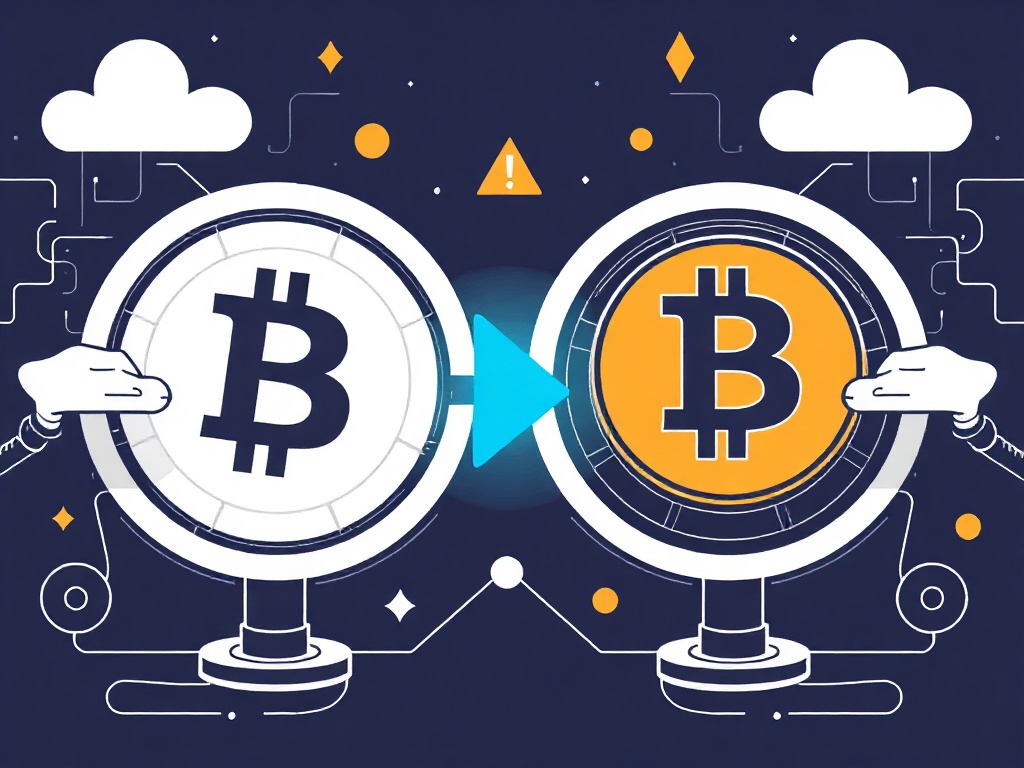
Both CoinSwap vs CoinJoin privacy protocols address this issue by breaking the on-chain link between sender and receiver. However, they do so using different cryptographic and transactional approaches. CoinJoin, the older and more widely adopted method, mixes multiple users’ inputs and outputs in a single transaction. CoinSwap, a more recent innovation, uses atomic swaps to exchange coins between participants without ever combining them in a single transaction.
These methods are not mutually exclusive—they serve different use cases and offer varying levels of privacy, cost, and complexity. To appreciate the differences, it’s essential to understand how each works at a technical level.
What Is CoinJoin? How It Works and Its Privacy Benefits
Definition and Core Mechanism
CoinJoin is a privacy protocol that allows multiple users to combine their inputs (Bitcoin amounts) into a single transaction, making it difficult to determine which input corresponds to which output. The concept was first proposed by Bitcoin Core developer Gregory Maxwell in 2013 and has since been implemented in various privacy-focused wallets such as Wasabi Wallet, Samourai Wallet, and JoinMarket.
In a typical CoinJoin transaction:
- Multiple users submit their Bitcoin inputs to a coordinator.
- The coordinator constructs a transaction where all inputs are spent together.
- Each user receives an output of the same denomination (or similar), but the exact mapping is obscured.
- The transaction is broadcast to the Bitcoin network.
How Privacy Is Achieved
The key to CoinJoin’s privacy lies in the plausible deniability it provides. Since all inputs and outputs are mixed together, an outside observer cannot determine which output belongs to which input. This breaks the chain of transaction history, making it harder to trace funds back to their origin.
For example, imagine three users—Alice, Bob, and Carol—each contributing 1 BTC to a CoinJoin. The transaction will have three inputs and three outputs, each of 1 BTC. An analyst sees a transaction with three inputs and three outputs but cannot determine which output belongs to which input. This creates uncertainty, enhancing privacy.
Popular CoinJoin Implementations
Several wallets and services have implemented CoinJoin:
- Wasabi Wallet: Uses Chaumian CoinJoin, where a central coordinator handles the mixing process. It requires users to pay a fee and uses a fixed denomination (0.01 BTC) to simplify mixing.
- Samourai Wallet: Offers a decentralized CoinJoin called "Whirlpool," which uses a peer-to-peer model and supports variable denominations.
- JoinMarket: A decentralized, peer-to-peer CoinJoin implementation where users act as both makers (providing liquidity) and takers (mixing their coins).
Advantages of CoinJoin
- Proven and widely used: CoinJoin has been around for nearly a decade and is supported by multiple wallets.
- Low cost: Transaction fees are shared among participants, making it relatively inexpensive.
- User-friendly: Wallets like Wasabi and Samourai offer one-click CoinJoin, making it accessible to non-technical users.
- Strong privacy guarantees: When used correctly, CoinJoin can significantly obscure transaction trails.
Limitations and Risks of CoinJoin
Despite its strengths, CoinJoin has several limitations:
- Coordinator trust (in some implementations): Wasabi Wallet uses a centralized coordinator, which could theoretically log or manipulate transactions (though it claims not to).
- Fixed denominations: Many CoinJoin implementations use fixed amounts (e.g., 0.01 BTC), which can reduce privacy if users need to mix non-standard amounts.
- Transaction size and fees: CoinJoin transactions are larger than standard transactions, leading to higher fees.
- Potential for deanonymization: If an attacker controls multiple inputs in a CoinJoin, they may be able to link outputs to inputs through timing or other heuristics.
These limitations highlight why some users and developers have turned to alternative solutions like CoinSwap, which offers a different approach to privacy.
What Is CoinSwap? How It Differs From CoinJoin in Privacy and Functionality
Definition and Core Mechanism
CoinSwap is a more recent privacy protocol that aims to improve upon CoinJoin by eliminating the need to combine inputs in a single transaction. Instead, CoinSwap uses atomic swaps to exchange coins between participants without ever merging them in a shared transaction. This approach was first proposed by Bitcoin developer Chris Belcher in 2018 and has gained traction as a more private and decentralized alternative.
In a CoinSwap transaction:
- Two users (Alice and Bob) agree to swap coins.
- Alice sends her coins to a timelocked address controlled by Bob, while Bob sends his coins to a timelocked address controlled by Alice.
- After a set time (e.g., 48 hours), both users can claim their swapped coins.
- If one user tries to cheat, the other can reclaim their coins using the timelock.
Crucially, the coins are never combined in a single transaction. This means there is no shared transaction history that could be analyzed by blockchain observers.
How Privacy Is Achieved
The privacy benefits of CoinSwap stem from its off-chain exchange mechanism. Since the coins are swapped directly between users without being merged, there is no transaction on the blockchain that links the original inputs to the final outputs. This makes it far more difficult for blockchain analysts to trace the flow of funds.
Additionally, CoinSwap transactions do not require a central coordinator, reducing the risk of trust-based attacks. The use of timelocks and cryptographic proofs ensures that both parties fulfill their obligations, or the transaction can be reversed.
Advantages of CoinSwap Over CoinJoin
CoinSwap offers several key advantages in the CoinSwap vs CoinJoin privacy debate:
- No shared transaction: Since coins are swapped directly, there is no single transaction that could be analyzed for input-output links.
- Better resistance to blockchain analysis: Without a combined transaction, there is no transaction graph to analyze, making it harder to trace funds.
- Decentralized and trustless: CoinSwap does not require a central coordinator, reducing the risk of censorship or manipulation.
- Supports variable amounts: Unlike many CoinJoin implementations, CoinSwap can handle any amount, making it more flexible for real-world use.
- Lower transaction fees: Since there is no large combined transaction, CoinSwap can be more cost-effective.
Limitations and Challenges of CoinSwap
Despite its advantages, CoinSwap is not without challenges:
- Complexity: CoinSwap requires both parties to be online and cooperative, making it less user-friendly than CoinJoin.
- Timelocks and delays: The use of timelocks means users must wait before receiving their swapped coins, which can be inconvenient.
- Limited adoption: CoinSwap is still in the experimental phase, with few wallets or services offering native support.
- Potential for griefing: If one party fails to complete the swap, the other may lose time or incur costs.
- No widespread tooling: Unlike CoinJoin, which has mature wallets like Wasabi and Samourai, CoinSwap lacks user-friendly interfaces.
These challenges explain why CoinSwap has not yet replaced CoinJoin but rather complements it as a more advanced privacy tool.
CoinSwap vs CoinJoin Privacy: A Side-by-Side Comparison
To better understand the differences between CoinSwap vs CoinJoin privacy, let’s compare them across several key dimensions: privacy guarantees, usability, cost, decentralization, and adoption.
| Feature | CoinJoin | CoinSwap |
|---|---|---|
| Privacy Mechanism | Combines inputs/outputs in a single transaction | Swaps coins directly without combining inputs |
| Transaction Visibility | Visible on-chain; can be analyzed | No shared transaction; harder to analyze |
| Coordinator Required? | Yes (in most implementations) | No (peer-to-peer) |
| Trust Model | Relies on coordinator honesty (in some cases) | Trustless; uses cryptographic proofs |
| User-Friendliness | High (one-click mixing in wallets like Wasabi) | Low (requires technical knowledge) |
| Cost | Moderate (shared fees) | Low (no large transaction) |
| Flexibility | Limited by fixed denominations in some wallets | Supports any amount |
| Adoption | Widely available (Wasabi, Samourai, JoinMarket) | Experimental (few tools available) |
| Resistance to Deanonymization | Moderate (vulnerable to timing and input clustering) | High (no shared transaction to analyze) |
Privacy Strength: Which Is Better?
In the CoinSwap vs CoinJoin privacy debate, CoinSwap generally offers superior privacy because it avoids creating a shared transaction that can be analyzed. Since there is no on-chain link between the original inputs and the swapped outputs, blockchain observers have no transaction graph to study. This makes CoinSwap highly resistant to chain analysis techniques.
CoinJoin, while effective, still leaves a footprint on the blockchain. Even though the exact input-output mapping is obscured, the existence of the transaction itself can be detected, and sophisticated analysis may still infer relationships based on timing, amounts, or other metadata. Additionally, if a coordinator is compromised or logs data, user privacy could be at risk.
However, CoinJoin remains more practical for most users due to its ease of use and widespread availability. For many, the trade-off between convenience and absolute privacy is acceptable.
Usability and Accessibility
CoinJoin wins in this category. Wallets like Wasabi and Samourai have made CoinJoin as simple as clicking a button. Users don’t need to understand the underlying mechanics—they just select the CoinJoin option, pay a small fee, and receive mixed coins. This accessibility has made CoinJoin the go-to privacy solution for most Bitcoin users.
CoinSwap, on the other hand, requires technical knowledge. Users must set up a swap, coordinate with a counterparty, and manage timelocks. While tools like Bitcoin Dev Project’s CoinSwap implementation are improving, the process is still complex for non-technical users.
Cost and Efficiency
CoinSwap is generally more cost-effective because it doesn’t require a large combined transaction. Instead, it uses smaller transactions (the swaps themselves) and timelocks, which can reduce overall fees. CoinJoin, while sharing fees among participants, still results in a larger transaction that incurs higher on-chain costs.
However, the cost difference may not be significant for most users, especially when considering the privacy benefits.
Decentralization and Trust
CoinSwap is the clear winner in decentralization. It operates without a central coordinator, reducing the risk of censorship, manipulation, or data leaks. The use of atomic swaps and timelocks ensures that both parties fulfill their obligations, making it a trustless system.
CoinJoin, particularly in implementations like Wasabi Wallet, relies on a coordinator. While reputable coordinators like Wasabi’s do not log data, the reliance on a third party introduces a potential point of failure. Decentralized CoinJoin implementations like JoinMarket mitigate this risk but are more complex to use.
Real-World Use Cases: When to Use CoinSwap vs CoinJoin
Use CoinJoin When...
CoinJoin is ideal for users who prioritize ease of use and want a proven, accessible privacy solution. Here are some scenarios where CoinJoin shines:
- Everyday Bitcoin users: If you want to mix small amounts of Bitcoin regularly, CoinJoin is the most practical choice. Wallets like Wasabi and Samourai make it simple.
- Privacy-conscious beginners: CoinJoin’s one-click interface lowers the barrier to entry for users new to Bitcoin privacy.
- Large transactions: CoinJoin can handle large amounts (e.g., 10+ BTC) by splitting them into smaller denominations and mixing them over multiple rounds.
- When using centralized services: If you need to interact with exchanges or services that require clean Bitcoin, CoinJoin can help you "launder" funds before depositing.
 Emily Parker
Crypto Investment Advisor
Emily Parker
Crypto Investment Advisor
CoinSwap vs CoinJoin Privacy: Which Offers Superior Anonymity for Crypto Investors?
As a certified financial analyst with over a decade of experience guiding investors through the complexities of digital assets, I’ve seen firsthand how privacy-enhancing technologies like CoinJoin and CoinSwap have reshaped the landscape of cryptocurrency transactions. When evaluating CoinSwap vs CoinJoin privacy, the choice ultimately depends on your specific needs, risk tolerance, and the level of anonymity you require. CoinJoin, popularized by tools like Wasabi Wallet and Samourai Wallet, mixes your transactions with others in a single batch, obscuring the origin of funds by breaking the on-chain link between inputs and outputs. This method is highly effective for users seeking to obfuscate their transaction history, particularly in Bitcoin, where UTXO-based tracking is prevalent. However, its effectiveness hinges on the size and diversity of the mixing pool—smaller pools or coordinated attacks can potentially deanonymize participants.
CoinSwap, on the other hand, represents a more advanced privacy solution by facilitating atomic swaps between parties without a trusted intermediary. Unlike CoinJoin, which relies on a central coordinator (even if non-custodial), CoinSwap operates in a decentralized manner, where two parties exchange coins directly while preserving privacy through cryptographic proofs. This eliminates the risk of a single point of failure or collusion among participants. From an investment perspective, CoinSwap is particularly compelling for high-net-worth individuals or institutions that require robust, long-term privacy, as it doesn’t rely on the liquidity constraints of mixing pools. That said, CoinSwap’s adoption is still in its early stages, and its complexity may deter casual users. For most retail investors, CoinJoin remains the more practical and accessible option, while CoinSwap appeals to those prioritizing cutting-edge privacy over convenience. Always assess your transaction volume, regulatory environment, and threat model before choosing—privacy isn’t one-size-fits-all.