Countries Where Bitcoin Mixing Is Banned: A Global Regulatory Landscape for BTC Mixers
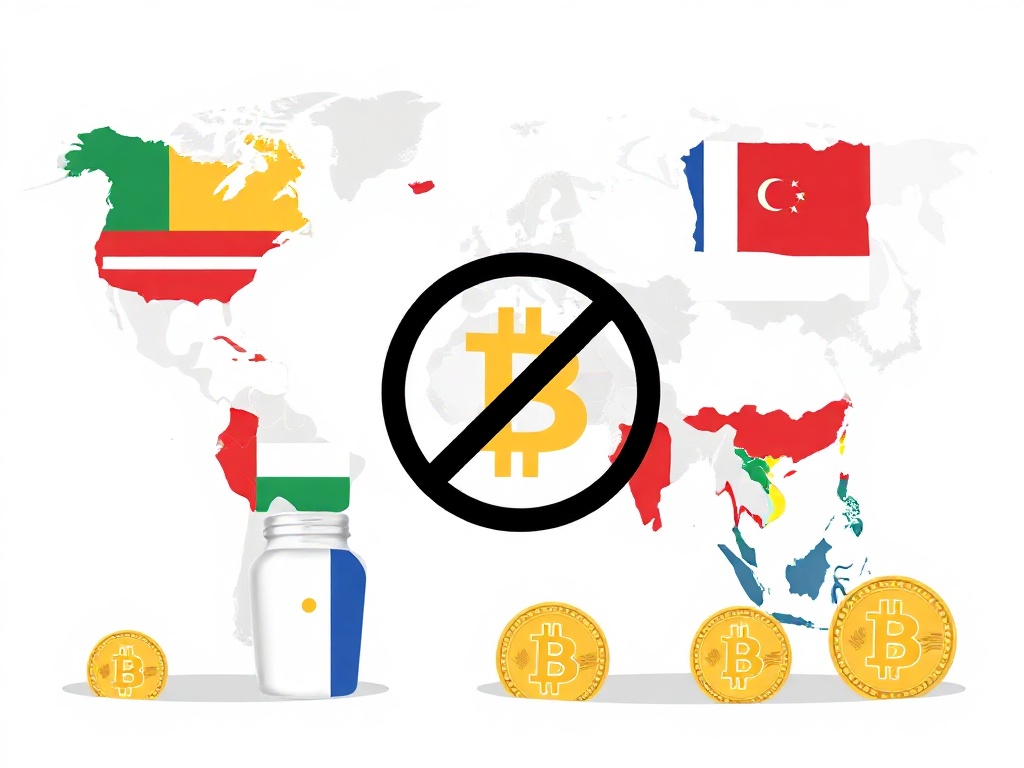
Bitcoin mixing services, also known as Bitcoin tumblers or cryptocurrency mixers, have long been a topic of debate in the digital finance ecosystem. These services allow users to obfuscate the origin of their Bitcoin transactions by mixing them with other users' funds, thereby enhancing privacy and anonymity. However, the rise of regulatory scrutiny has led several governments to ban or restrict the use of Bitcoin mixing services within their jurisdictions. Understanding which countries have imposed such bans is crucial for users, businesses, and regulators alike.
In this comprehensive guide, we explore the countries where Bitcoin mixing is banned, the legal frameworks behind these restrictions, and the implications for cryptocurrency users. Whether you're a privacy advocate, a trader, or a compliance officer, this article will provide you with the insights needed to navigate the evolving regulatory landscape of Bitcoin mixing.
The Rise of Bitcoin Mixing and Regulatory Concerns
What Are Bitcoin Mixing Services?
Bitcoin mixing services operate by pooling together Bitcoins from multiple users and redistributing them in a way that severs the on-chain link between the sender and receiver. This process is often used to enhance financial privacy, especially in regions with strict capital controls or where surveillance is prevalent. Popular Bitcoin mixers include Wasabi Wallet, Samourai Wallet, and centralized services like ChipMixer (which was shut down in 2023).
While privacy is a legitimate concern for many users, regulators argue that Bitcoin mixers can be exploited for illicit activities, including money laundering, ransomware payments, and darknet market transactions. As a result, several governments have taken steps to ban or heavily regulate these services.
Why Do Governments Oppose Bitcoin Mixing?
Governments and financial authorities worldwide have expressed concerns over Bitcoin mixing due to several key reasons:
- Anti-Money Laundering (AML) Compliance: Mixers can obscure the flow of illicit funds, making it difficult for authorities to trace criminal transactions.
- Counter-Terrorism Financing (CTF): Terrorist organizations and extremist groups may use mixers to fund their operations without detection.
- Tax Evasion: Mixers can help individuals hide income or capital gains from tax authorities.
- Sanctions Evasion: Entities subject to international sanctions may use mixers to bypass restrictions.
These concerns have led to the classification of Bitcoin mixing services as high-risk or even illegal in certain jurisdictions. Below, we examine the countries where Bitcoin mixing is banned and the legal consequences for users and operators.
Countries Where Bitcoin Mixing Is Banned: A Regional Breakdown
North America: The United States Leads the Charge
The United States has been at the forefront of regulating Bitcoin mixing services, with several agencies taking a firm stance against their use.
United States: Strict AML Laws and Enforcement Actions
The U.S. has classified Bitcoin mixing services as money services businesses (MSBs) under the Bank Secrecy Act (BSA). This means that operators of mixers must comply with stringent AML and Know Your Customer (KYC) regulations. Failure to do so can result in severe penalties, including fines and imprisonment.
In 2023, the U.S. Department of the Treasury's Financial Crimes Enforcement Network (FinCEN) issued guidance explicitly stating that Bitcoin mixers are high-risk for illicit finance. Additionally, the U.S. has sanctioned several mixer services, including:
- Blender.io: Sanctioned in 2022 for facilitating transactions linked to North Korean cybercrime.
- Tornado Cash: Sanctioned in 2022 for allegedly laundering over $7 billion in illicit funds.
- ChipMixer: Shut down in 2023 following a joint operation by U.S. and European authorities.
Users in the U.S. who utilize Bitcoin mixers may face legal repercussions, particularly if the funds are linked to illicit activities. The Internal Revenue Service (IRS) and the Federal Bureau of Investigation (FBI) have also warned against the use of mixers for tax evasion.
Canada: Regulatory Ambiguity and Compliance Risks
Canada has not explicitly banned Bitcoin mixing, but the use of such services is heavily scrutinized under the Proceeds of Crime (Money Laundering) and Terrorist Financing Act (PCMLTFA). Financial institutions and cryptocurrency exchanges in Canada are required to report suspicious transactions, including those involving mixers.
While there have been no high-profile enforcement actions against Bitcoin mixers in Canada, users should exercise caution. The Financial Transactions and Reports Analysis Centre of Canada (FINTRAC) has issued warnings about the risks associated with mixing services, particularly in the context of money laundering.
Europe: A Patchwork of Regulations and Bans
Europe presents a complex regulatory environment for Bitcoin mixing, with some countries imposing outright bans while others adopt a more lenient approach.
European Union: AMLD5 and the Push for Stricter Controls
The European Union (EU) has taken significant steps to regulate cryptocurrency mixers through the Fifth Anti-Money Laundering Directive (AMLD5), which came into effect in 2020. Under AMLD5, cryptocurrency service providers, including mixers, are required to comply with AML and KYC regulations.
Several EU member states have gone further by explicitly banning or restricting Bitcoin mixing:
- Netherlands: The Dutch central bank (De Nederlandsche Bank) has classified Bitcoin mixers as unlicensed financial services, effectively banning their operation.
- Germany: The Federal Financial Supervisory Authority (BaFin) has warned that Bitcoin mixers may require a banking license, making their operation illegal without proper authorization.
- France: The French Prudential Supervision and Resolution Authority (ACPR) has issued guidelines classifying mixers as high-risk and subject to AML scrutiny.
Additionally, the EU's Markets in Crypto-Assets Regulation (MiCA), which will fully come into effect in 2024, is expected to further tighten regulations around Bitcoin mixing services.
United Kingdom: FCA Warnings and Enforcement Actions
The United Kingdom's Financial Conduct Authority (FCA) has taken a strong stance against Bitcoin mixing services. In 2022, the FCA issued a warning stating that mixers are high-risk and may be used for illicit activities. While the UK has not explicitly banned mixers, the FCA has the authority to impose fines and other penalties on operators who fail to comply with AML regulations.
In 2023, the FCA fined a cryptocurrency exchange £2.6 million for failing to implement adequate AML controls, including transactions involving mixers. This underscores the regulatory risks associated with Bitcoin mixing in the UK.
Asia: China’s Crackdown and Other Restrictive Regimes
Asia presents a stark contrast in its approach to Bitcoin mixing with some countries imposing outright bans while others remain neutral or unregulated.
China: A Total Ban on Cryptocurrency Mixing
China has taken one of the most aggressive stances against Bitcoin mixing, classifying it as an illegal financial activity under its 2021 cryptocurrency ban. The People's Bank of China (PBOC) has explicitly stated that Bitcoin mixing services facilitate money laundering and other illicit activities, making their operation illegal.
Chinese authorities have also cracked down on over-the-counter (OTC) trading desks and peer-to-peer (P2P) platforms that facilitate mixing. Users caught using Bitcoin mixers in China may face fines, asset seizures, or even criminal charges.
South Korea: Strict AML Laws and Exchange Restrictions
South Korea has implemented stringent AML laws that indirectly target Bitcoin mixing services. While mixers are not explicitly banned, the country's Special Financial Information Act requires cryptocurrency exchanges to report transactions involving mixers as suspicious activities.
In 2022, South Korean authorities raided several cryptocurrency exchanges suspected of facilitating transactions linked to mixers. The government has also warned that users who engage in mixing may face legal consequences, particularly if the funds are linked to illicit activities.
Japan: Regulatory Oversight and Compliance Requirements
Japan has adopted a more measured approach to Bitcoin mixing. The country's Financial Services Agency (FSA) has classified mixers as high-risk but has not imposed an outright ban. Instead, operators of mixing services must register as cryptocurrency exchange service providers and comply with AML and KYC regulations.
While Japan has not taken enforcement actions against Bitcoin mixers, the FSA has issued warnings about the risks associated with their use. Users in Japan should be aware that transactions involving mixers may be flagged for further scrutiny by financial authorities.
Middle East and Africa: Limited Regulation but High Risks
The Middle East and Africa present a mixed regulatory landscape for Bitcoin mixing, with some countries imposing strict controls while others remain largely unregulated.
United Arab Emirates (UAE): A Growing Regulatory Framework
The UAE has taken steps to regulate cryptocurrency activities, including Bitcoin mixing, under its Virtual Assets Regulatory Authority (VARA). While mixers are not explicitly banned, VARA requires cryptocurrency service providers to implement robust AML and KYC measures.
In 2023, the UAE issued guidelines classifying Bitcoin mixers as high-risk and subject to enhanced due diligence. Users in the UAE who utilize mixers may face regulatory scrutiny, particularly if the transactions are linked to illicit activities.
South Africa: Regulatory Uncertainty and Compliance Risks
South Africa has not explicitly banned Bitcoin mixing, but the use of such services is subject to the country's Financial Intelligence Centre Act (FICA). Financial institutions and cryptocurrency exchanges are required to report suspicious transactions, including those involving mixers.
The South African Reserve Bank (SARB) has issued warnings about the risks associated with Bitcoin mixing, particularly in the context of money laundering and tax evasion. While there have been no high-profile enforcement actions against mixers, users should exercise caution.
Latin America: A Mixed Regulatory Environment
Latin America presents a diverse regulatory landscape for Bitcoin mixing, with some countries adopting strict controls while others remain neutral.
Brazil: Central Bank Warnings and Compliance Risks
Brazil's central bank, the Banco Central do Brasil, has issued warnings about the risks associated with Bitcoin mixing. While mixers are not explicitly banned, the central bank has classified them as high-risk and subject to AML scrutiny.
In 2022, Brazilian authorities raided a cryptocurrency exchange suspected of facilitating transactions linked to mixers. Users in Brazil who utilize Bitcoin mixers may face regulatory scrutiny, particularly if the funds are linked to illicit activities.
Argentina: Limited Regulation but High Risks
Argentina has not explicitly banned Bitcoin mixing, but the use of such services is subject to the country's Anti-Money Laundering Law. Financial institutions and cryptocurrency exchanges are required to report suspicious transactions, including those involving mixers.
The Argentine government has issued warnings about the risks associated with Bitcoin mixing, particularly in the context of tax evasion and money laundering. While there have been no high-profile enforcement actions against mixers, users should exercise caution.
Legal Consequences of Using Bitcoin Mixers in Banned Countries
Criminal Charges and Financial Penalties
In countries where Bitcoin mixing is banned, users and operators of mixing services may face severe legal consequences, including:
- Criminal Charges: In the U.S., using a Bitcoin mixer for illicit activities can result in charges of money laundering, wire fraud, or conspiracy. Penalties may include imprisonment for up to 20 years and fines exceeding $500,000.
- Financial Penalties: In the EU, operators of unlicensed mixing services may face fines of up to €5 million or 10% of their annual turnover, whichever is higher.
- Asset Seizures: In China, authorities may seize assets linked to Bitcoin mixing, including cryptocurrency holdings and bank accounts.
- Reputational Damage: Even in countries where mixing is not explicitly banned, users may face reputational harm if their transactions are flagged as suspicious by financial institutions.
Impact on Cryptocurrency Exchanges and Service Providers
Cryptocurrency exchanges and other service providers in banned countries must implement robust AML and KYC measures to avoid regulatory scrutiny. Failure to do so can result in:
- License Revocation: In Japan and South Korea, exchanges that fail to comply with AML regulations may have their licenses revoked.
- Fines and Sanctions: In the U.S. and EU, exchanges that facilitate transactions involving mixers may face fines and sanctions from regulatory authorities.
- Delisting of Privacy Coins: Some exchanges in banned countries have delisted privacy-focused cryptocurrencies, such as Monero (XMR), to comply with regulations.
International Cooperation and Enforcement Actions
Regulatory authorities worldwide are increasingly collaborating to combat the use of Bitcoin mixers for illicit activities. Key initiatives include:
- Interpol and Europol Operations: International law enforcement agencies have conducted joint operations to shut down mixing services and apprehend operators.
- Sanctions by the U.S. Treasury: The U.S. has imposed sanctions on several mixing services, including Tornado Cash and Blender.io, effectively banning their use by U.S. citizens.
- Extradition Requests: In cases involving cross-border illicit activities, authorities may seek extradition of individuals involved in operating Bitcoin mixers.
These enforcement actions underscore the global nature of the crackdown on Bitcoin mixing and the risks associated with using such services in banned countries.
Alternatives to Bitcoin Mixing in Restricted Jurisdictions
Privacy-Focused Wallets and Techniques
For users in countries where Bitcoin mixing is banned, there are alternative methods to enhance privacy without violating local laws:
- CoinJoin Services: Services like Wasabi Wallet and Samourai Wallet offer CoinJoin, a privacy-enhancing feature that mixes transactions without requiring a centralized mixer.
- Lightning Network: The Lightning Network allows for fast and low-cost Bitcoin transactions with enhanced privacy, as transactions are not recorded on the blockchain.
- Peer-to-Peer (P2P) Trading: Platforms like Bisq and LocalBitcoins enable users to trade Bitcoin directly with each other, reducing the need for intermediaries like mixers.
- Stealth Addresses: Some privacy-focused wallets, such as Monero (XMR), use stealth addresses to obfuscate transaction details.
Decentralized Finance (DeFi) Solutions
Decentralized finance (DeFi) platforms offer users in banned countries alternative ways to enhance privacy and financial autonomy:
- Decentralized Exchanges (DEXs): Platforms like Uniswap and PancakeSwap allow users to trade cryptocurrencies without the need for centralized exchanges, which may be subject to AML regulations.
- Privacy Coins: Cryptocurrencies like Monero (XMR), Zcash (ZEC), and Dash (DASH) offer enhanced privacy features that can be used as alternatives to Bitcoin mixing.
- Atomic Swaps: Atomic swaps enable users to exchange cryptocurrencies directly without the need for intermediaries, reducing the risk of regulatory scrutiny.
Legal and Compliance Considerations
Users in banned countries should also consider the following legal and compliance risks when exploring alternatives to Bitcoin mixing:
- Tax Implications: Even in countries where mixing is banned, users may still be required to report cryptocurrency transactions for tax purposes.
- Banking Restrictions: Some banks and financial institutions may flag transactions involving privacy-enhancing technologies, leading to account freezes or closures.
- Regulatory Updates: The regulatory landscape for cryptocurrency is constantly evolving, and users should stay informed about changes in local laws.
Future Outlook: The Evolving Regulatory Landscape for Bitcoin Mixing
Global Trends in Cryptocurrency Regulation
The regulatory environment for Bitcoin mixing is expected to become increasingly stringent in the coming years. Key trends include

Bitcoin Mixing Bans: A Critical Analysis of Jurisdictional Restrictions and Their Market Impact
As a Senior Crypto Market Analyst with over a decade of experience in digital asset markets, I’ve observed that the rise of regulatory scrutiny around Bitcoin mixing services reflects broader concerns about financial privacy, illicit activity, and sovereign control over monetary flows. Countries where Bitcoin mixing is banned—such as the United States, South Korea, and parts of the European Union—are not acting arbitrarily. These restrictions stem from governments’ efforts to combat money laundering, ransomware funding, and sanctions evasion, all of which have been linked to anonymity-enhancing tools like CoinJoin or Wasabi Wallet. While the intent is clear, the unintended consequence is the fragmentation of liquidity and the forced migration of privacy-focused users to jurisdictions with looser oversight. This creates a bifurcated market where compliant actors operate in regulated environments, while others seek out underground or offshore alternatives, increasing systemic risk.
From a practical standpoint, these bans disproportionately affect retail users and privacy advocates who rely on mixing for legitimate purposes, such as protecting against surveillance or mitigating the risks of exchange hacks. Institutions, by contrast, can often navigate these restrictions through KYC-compliant custodians or regulated mixers, though at the cost of additional compliance overhead. The key insight here is that outright bans rarely eliminate the demand for privacy tools—they merely drive them underground, where oversight is nonexistent and risks of fraud or asset loss are higher. For policymakers, the challenge lies in balancing anti-financial crime objectives with the preservation of user rights. A more nuanced approach, such as licensing regulated mixing services with strict reporting requirements, could mitigate illicit activity without stifling innovation. Until such frameworks emerge, the market will continue to grapple with the tension between privacy and regulation, with liquidity pools increasingly segmented along jurisdictional lines.