Cross-Chain Cluster Analysis: Unveiling Hidden Patterns in BTC Mixer Transactions
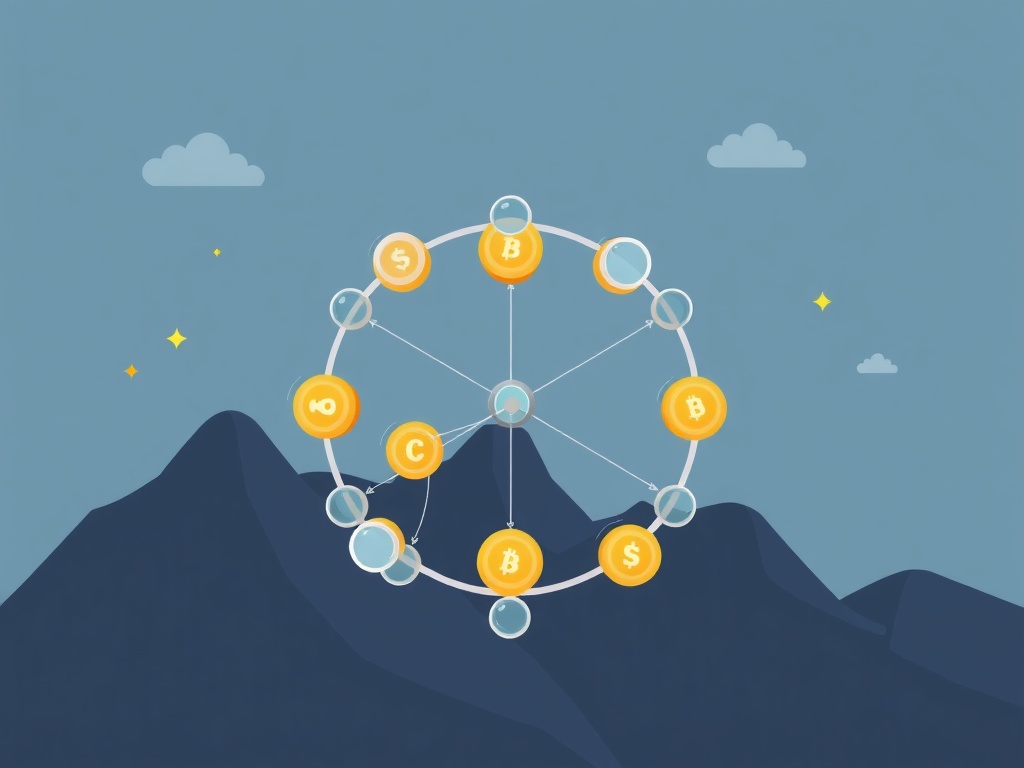
In the rapidly evolving world of cryptocurrency privacy solutions, cross-chain cluster analysis has emerged as a powerful technique for tracking and analyzing Bitcoin (BTC) mixer transactions across multiple blockchain networks. This advanced analytical approach provides unprecedented insights into the flow of funds, helping investigators, compliance teams, and researchers uncover hidden patterns that traditional single-chain analysis often misses.
As Bitcoin mixers become increasingly sophisticated, so too must the methods used to study their operations. Cross-chain cluster analysis bridges the gap between isolated blockchain ecosystems, offering a holistic view of transactional behavior that spans Bitcoin, Ethereum, Monero, and other major networks. By examining the interconnected nature of these systems, analysts can trace funds more effectively, identify suspicious activities, and develop more robust privacy solutions.
This comprehensive guide explores the intricacies of cross-chain cluster analysis in the context of BTC mixers, examining its methodologies, applications, challenges, and future trends. Whether you're a blockchain investigator, a compliance professional, or a privacy enthusiast, understanding this technique will enhance your ability to navigate the complex landscape of cryptocurrency transactions.
Understanding Cross-Chain Cluster Analysis in Cryptocurrency
The Evolution of Blockchain Transaction Analysis
Blockchain transaction analysis has undergone significant transformations since Bitcoin's inception in 2009. Initially, analysts relied on basic heuristics such as common input ownership and change address detection to trace funds. However, these methods proved inadequate as privacy-enhancing technologies like Bitcoin mixers evolved.
Traditional single-chain analysis operates within the confines of a single blockchain, often missing critical connections that exist across different networks. For example, a Bitcoin mixer might deposit cleaned funds into an Ethereum-based privacy protocol like Tornado Cash. Without cross-chain analysis, these transactions would appear unrelated, allowing illicit actors to exploit the gaps in monitoring systems.
Cross-chain cluster analysis addresses this limitation by correlating data from multiple blockchains, creating a unified view of transactional behavior. This approach leverages advanced graph theory, machine learning, and data fusion techniques to identify clusters of addresses that likely belong to the same entity or service.
Key Components of Cross-Chain Analysis
A robust cross-chain cluster analysis framework typically includes several key components:
- Data Aggregation: Collecting transactional data from multiple blockchains, including Bitcoin, Ethereum, Litecoin, and privacy-focused coins like Monero and Zcash.
- Address Clustering: Grouping addresses that are likely controlled by the same entity using heuristics such as shared transaction inputs, IP address correlations, or behavioral patterns.
- Graph Analysis: Constructing transaction graphs where nodes represent addresses and edges represent transactions, enabling the identification of central hubs and suspicious flows.
- Entity Resolution: Linking clustered addresses to real-world entities, such as exchanges, mixers, or illicit services, using off-chain data sources like KYC records or darknet market listings.
- Temporal Analysis: Examining transaction patterns over time to detect anomalies, such as sudden spikes in activity or coordinated movements across chains.
Why Cross-Chain Analysis Matters for BTC Mixers
Bitcoin mixers, also known as tumblers, are designed to obscure the origin and destination of funds by mixing them with those of other users. While these services enhance privacy, they also create opportunities for money laundering, ransomware payments, and other illicit activities. Cross-chain cluster analysis is crucial for:
- Enhancing Compliance: Helping financial institutions and regulators identify and report suspicious transactions involving BTC mixers.
- Improving Investigations: Providing law enforcement agencies with tools to trace illicit funds across multiple blockchains, increasing the chances of recovery and prosecution.
- Strengthening Privacy Protocols: Enabling developers to identify vulnerabilities in privacy-enhancing technologies and design more robust solutions.
- Reducing False Positives: Minimizing the misclassification of legitimate transactions as suspicious by providing a more nuanced understanding of cross-chain behavior.
By integrating cross-chain cluster analysis into their workflows, stakeholders can stay one step ahead of bad actors who exploit the fragmented nature of blockchain ecosystems.
Methodologies for Conducting Cross-Chain Cluster Analysis
Data Collection and Preprocessing
The first step in any cross-chain cluster analysis project is gathering and preparing the data. This process involves:
- Blockchain Data Extraction:
- Using APIs from blockchain explorers (e.g., Blockstream, Blockchain.com, Etherscan) to retrieve transaction histories.
- Accessing node data directly via RPC endpoints for Bitcoin and other supported chains.
- Incorporating off-chain data sources, such as exchange APIs, darknet market forums, or IP address logs from mixers.
- Data Normalization:
- Standardizing address formats across different blockchains to ensure consistency.
- Converting transaction amounts to a common unit (e.g., satoshis for Bitcoin, wei for Ethereum) for comparative analysis.
- Removing duplicate or redundant entries to streamline processing.
- Data Enrichment:
- Augmenting raw transaction data with metadata, such as timestamps, block heights, and transaction fees.
- Incorporating external datasets, such as exchange withdrawal records or IP geolocation data, to enhance clustering accuracy.
Address Clustering Techniques
Address clustering is the cornerstone of cross-chain cluster analysis. It involves grouping addresses that are likely controlled by the same entity. Several techniques are commonly used:
- Heuristic-Based Clustering:
- Common Input Ownership: If multiple addresses are used as inputs in the same transaction, they are likely controlled by the same entity.
- Change Address Detection: In Bitcoin transactions, the change address often belongs to the sender, providing a clue to link addresses.
- Behavioral Patterns: Addresses that exhibit similar transaction patterns (e.g., timing, amounts, or frequency) may belong to the same cluster.
- Graph-Based Clustering:
- Connected Components: Identifying groups of addresses that are interconnected through transactions, forming clusters.
- Community Detection: Using algorithms like Louvain or Girvan-Newman to partition the transaction graph into communities of related addresses.
- Centrality Measures: Analyzing the importance of addresses within the graph (e.g., degree centrality, betweenness centrality) to identify key hubs.
- Machine Learning Approaches:
- Supervised Learning: Training models on labeled datasets to classify addresses into known clusters (e.g., exchanges, mixers, or illicit services).
- Unsupervised Learning: Using clustering algorithms (e.g., k-means, DBSCAN) to group addresses based on transactional features without prior labels.
- Graph Neural Networks (GNNs): Leveraging deep learning models to analyze the structure of transaction graphs and identify patterns indicative of shared ownership.
Cross-Chain Correlation Strategies
One of the most challenging aspects of cross-chain cluster analysis is correlating data across different blockchains. Several strategies can be employed:
- Transaction Pattern Matching:
- Identifying transactions with identical or similar characteristics (e.g., amounts, timing, or script types) across chains.
- Using fingerprinting techniques to create unique signatures for transactions, enabling cross-chain matching.
- Bridge and Atomic Swap Detection:
- Monitoring cross-chain bridges (e.g., Wrapped Bitcoin on Ethereum) and atomic swaps to trace funds as they move between networks.
- Analyzing liquidity pools and decentralized exchanges (DEXs) for signs of cross-chain fund movements.
- Off-Chain Data Integration:
- Correlating on-chain transactions with off-chain events, such as withdrawals from exchanges or deposits into mixers.
- Using IP address logs or user-agent strings to link addresses across chains based on shared infrastructure.
- Temporal Alignment:
- Aligning transactions across chains based on timestamps to identify coordinated movements.
- Detecting time-based patterns, such as rapid movements between chains to obscure fund origins.
Visualization and Interpretation
Effective cross-chain cluster analysis relies on clear visualization and interpretation of results. Tools and techniques for this include:
- Graph Visualization:
- Using software like Gephi, Cytoscape, or custom-built dashboards to render transaction graphs.
- Highlighting clusters, central nodes, and suspicious patterns with color-coding or annotations.
- Interactive Dashboards:
- Developing web-based interfaces that allow users to explore clusters, filter transactions, and drill down into specific addresses.
- Incorporating real-time data updates to reflect the latest transactional activity.
- Statistical Analysis:
- Applying statistical tests to validate the significance of detected clusters or patterns.
- Using metrics like modularity or conductance to evaluate the quality of graph partitions.
- Reporting and Documentation:
- Generating detailed reports that summarize findings, including visualizations, cluster summaries, and risk assessments.
- Providing actionable insights for investigators, compliance teams, or developers.
Applications of Cross-Chain Cluster Analysis in BTC Mixer Investigations
Tracking Illicit Funds Through Multiple Blockchains
One of the primary applications of cross-chain cluster analysis is in tracking illicit funds that pass through BTC mixers. For example, consider a ransomware attack where the perpetrators demand payment in Bitcoin. After receiving the ransom, they may use a mixer to obscure the funds' origin before converting them to another cryptocurrency or cashing out through an exchange.
Without cross-chain analysis, investigators might only see the initial ransom payment and the final withdrawal from the mixer. However, by correlating data across Bitcoin, Ethereum, and other chains, analysts can trace the funds as they move through:
- Bitcoin mixers (e.g., Wasabi Wallet, Samourai Whirlpool).
- Cross-chain bridges (e.g., RenBTC, wBTC).
- Privacy coins (e.g., Monero, Zcash).
- Decentralized exchanges (e.g., Uniswap, SushiSwap).
- Centralized exchanges (e.g., Binance, Coinbase).
This holistic approach increases the chances of identifying the perpetrators and recovering stolen funds.
Identifying Mixer Service Providers and Users
Cross-chain cluster analysis can also help identify the operators and users of BTC mixers. By analyzing transaction patterns, investigators can:
- Pinpoint Mixer Addresses: Identifying clusters of addresses that interact with known mixer services, such as deposit or withdrawal addresses.
- Map User Networks: Tracing the flow of funds from mixer users to their final destinations, whether that's exchanges, gambling sites, or other services.
- Detect Anomalies: Spotting unusual behaviors, such as a single address receiving funds from multiple mixers or a user splitting funds across multiple chains to avoid detection.
For instance, if a cluster of addresses is found to frequently deposit into and withdraw from Wasabi Wallet, investigators can infer that these addresses are likely controlled by the same mixer service or a coordinated group of users.
Enhancing Anti-Money Laundering (AML) Compliance
Financial institutions and cryptocurrency businesses are increasingly adopting cross-chain cluster analysis to enhance their AML compliance programs. By integrating this technique into their transaction monitoring systems, they can:
- Improve Risk Scoring: Assigning higher risk scores to transactions involving addresses linked to known mixers or illicit services.
- Automate Alerts: Generating automated alerts for suspicious cross-chain activities, such as rapid movements between Bitcoin and privacy coins.
- Streamline Investigations: Providing investigators with pre-clustered data, reducing the time and effort required to trace funds.
- Support Regulatory Reporting: Generating detailed reports for regulators that demonstrate compliance with AML and Know Your Customer (KYC) requirements.
For example, a bank using cross-chain cluster analysis might detect that a customer's Bitcoin deposit originated from a mixer and was subsequently converted to Monero. This information could trigger an internal investigation and a Suspicious Activity Report (SAR) to authorities.
Supporting Law Enforcement and Cybercrime Units
Law enforcement agencies are leveraging cross-chain cluster analysis to combat cybercrime, including:
- Darknet Market Investigations: Tracing funds from darknet market purchases through mixers and into fiat currency.
- Ransomware Tracing: Identifying the flow of ransom payments from victims to attackers, even as funds are laundered through multiple chains.
- Terrorist Financing Detection: Monitoring cross-chain transactions linked to known terrorist organizations or their supporters.
- Fraud and Scam Investigations: Tracking the movement of stolen funds through mixers and other obfuscation techniques.
In 2021, the U.S. Department of Justice (DOJ) seized over $2.3 million in cryptocurrency linked to the Colonial Pipeline ransomware attack. This investigation relied heavily on blockchain forensics, including cross-chain cluster analysis, to trace the ransom payment from the victim to the attackers' wallets.
Developing Privacy-Enhancing Solutions
While cross-chain cluster analysis is often used for surveillance and compliance, it also plays a role in developing more robust privacy solutions. Privacy advocates and developers use these techniques to:
- Identify Vulnerabilities: Testing the resilience of privacy protocols (e.g., CoinJoin, zk-SNARKs) against clustering attacks.
- Improve Mixer Design: Enhancing the anonymity sets of mixers by analyzing user behavior and transaction patterns.
- Educate Users: Raising awareness about the limitations of privacy tools and best practices for maintaining anonymity.
For example, researchers have used cross-chain cluster analysis to demonstrate how even advanced mixers like Wasabi Wallet can be deanonymized when combined with off-chain data. This feedback loop helps developers refine their protocols to better protect user privacy.
Challenges and Limitations of Cross-Chain Cluster Analysis
Data Fragmentation and Incompatibility
One of the biggest challenges in cross-chain cluster analysis is the fragmentation and incompatibility of data across different blockchains. Each blockchain has its own:
- Address Formats: Bitcoin uses Base58 addresses, while Ethereum uses hexadecimal addresses. This requires normalization before analysis.
- Transaction Structures: Bitcoin transactions are UTXO-based, while Ethereum uses account-based models, complicating direct comparisons.
- Scripting Languages: Bitcoin's Script and Ethereum's Solidity operate differently, affecting how transactions are interpreted.
- Privacy Features:
 David ChenDigital Assets Strategist
Cross-Chain Cluster Analysis: Unlocking Hidden Patterns in Digital Asset Networks
As a digital assets strategist with a background in both traditional finance and crypto markets, I’ve seen firsthand how fragmented blockchain ecosystems can obscure critical insights. Cross-chain cluster analysis is a game-changer because it transcends the siloed nature of individual networks, revealing systemic risks, arbitrage opportunities, and illicit activity that would otherwise go undetected. Traditional on-chain analytics often stop at the perimeter of a single chain, but in a multi-chain world, capital flows don’t respect blockchain boundaries. By mapping transactional relationships across Ethereum, Solana, Cosmos, and others, we can identify coordinated movements—whether they’re whale migrations, MEV bots exploiting cross-chain arbitrage, or, unfortunately, sophisticated money laundering schemes. The key lies in leveraging graph theory and machine learning to cluster addresses not just by their native chain activity, but by their inter-chain behavior, normalized for gas costs, liquidity depth, and bridge utilization.
From a practical standpoint, cross-chain cluster analysis isn’t just an academic exercise—it’s a necessity for institutional players navigating DeFi’s complexity. Consider a scenario where a major stablecoin issuer detects an anomalous outflow from a bridge contract on Polygon, only to find the funds reappear on Arbitrum within minutes. Without cross-chain visibility, this could be misclassified as two separate events. But with cluster analysis, we’d see the same set of addresses orchestrating the movement, allowing us to flag potential front-running, sandwich attacks, or even a coordinated exploit. For portfolio managers, this technique enables more robust risk assessment: by identifying clusters that span high-yield but volatile chains (e.g., Avalanche subnets) and correlating their activity with macro events, we can preemptively adjust exposure. The challenge? Data fragmentation. Most cross-chain tools still rely on centralized indexers or RPC endpoints, which introduce latency and potential manipulation risks. The future lies in decentralized oracle networks and zk-proofs to validate cross-chain clusters in real time, ensuring both speed and integrity.