Custodial Mixing vs Atomic Swaps: Which Method Offers Better Privacy and Security for Bitcoin Transactions?
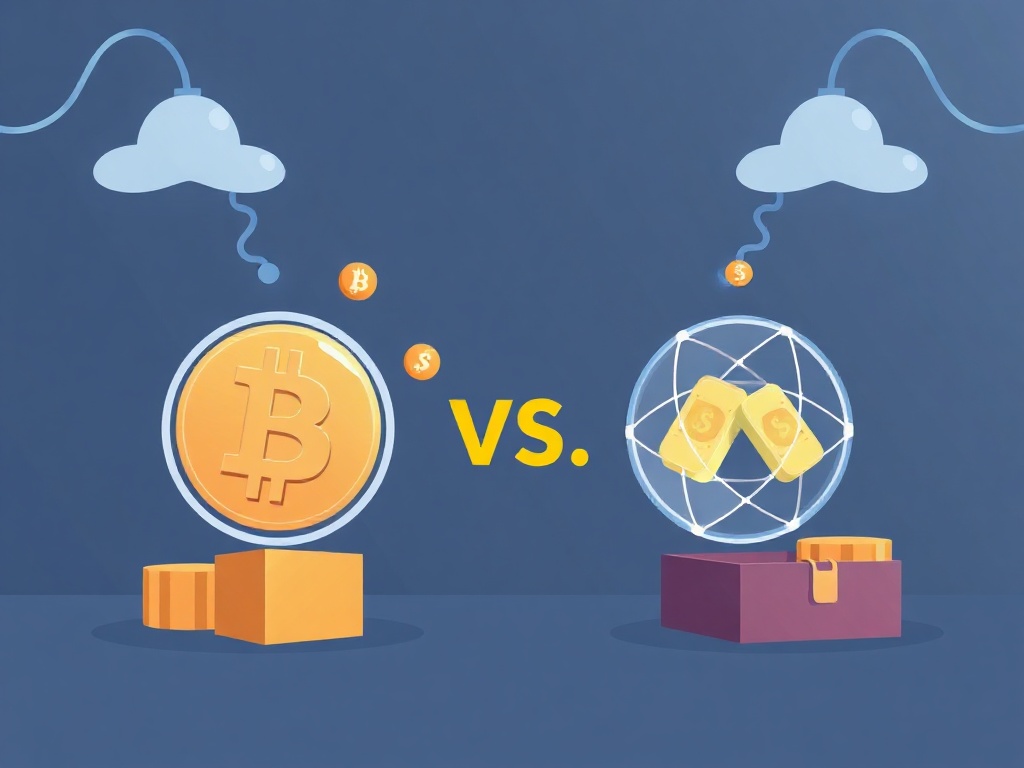
In the evolving landscape of Bitcoin privacy solutions, two prominent techniques have emerged as key players: custodial mixing and atomic swaps. Both methods aim to enhance transaction anonymity and security, but they operate on fundamentally different principles. Understanding the distinctions between custodial mixing vs atomic swaps is essential for users seeking to protect their financial privacy in an increasingly transparent blockchain environment.
This comprehensive guide explores the mechanics, advantages, and drawbacks of each approach. We’ll examine how custodial mixing services obscure transaction trails through centralized intermediaries, while atomic swaps facilitate peer-to-peer exchanges without trusted third parties. By analyzing security risks, privacy implications, and practical use cases, this article will help you determine which method aligns best with your privacy and operational needs.
Understanding Custodial Mixing: How Centralized Services Obscure Transaction Trails
What Is Custodial Mixing?
Custodial mixing, often referred to as Bitcoin mixing or tumbler services, involves using a third-party service to break the on-chain link between the sender and receiver of Bitcoin. These services pool together funds from multiple users and redistribute them in a way that makes it difficult to trace the origin of any individual transaction.
For example, if Alice sends 1 BTC to a mixing service, the service might send 0.9 BTC to Bob and 0.1 BTC to Charlie, while keeping a small fee. The original 1 BTC is now split and sent to different addresses, making it challenging for blockchain analysts to reconstruct the transaction path.
How Custodial Mixing Services Operate
Most custodial mixing platforms follow a multi-step process:
- Deposit: Users send Bitcoin to a designated address controlled by the mixing service.
- Delay: The service holds funds for a variable period to break transaction timing correlations.
- Distribution: After a delay, the service sends an equivalent amount (minus fees) to a new address specified by the user.
- Fee Structure: Mixers typically charge between 1% and 3% per transaction, depending on service quality and privacy level.
Popular custodial mixers include Bitcoin Fog, Wasabi Wallet’s CoinJoin, and Samourai Wallet’s Whirlpool. While Wasabi and Samourai operate as non-custodial CoinJoin implementations, some traditional mixers like Bitcoin Fog are fully custodial, meaning they control user funds during the mixing process.
Privacy Benefits of Custodial Mixing
The primary advantage of custodial mixing is its ability to break the deterministic link between Bitcoin addresses. Since multiple users contribute to a shared pool, it becomes statistically difficult for blockchain forensics tools to trace funds back to their origin.
This is particularly valuable for individuals in jurisdictions with strict financial surveillance or those seeking to protect their spending habits from public scrutiny. By severing the connection between input and output addresses, custodial mixing significantly enhances transactional privacy.
Security Risks and Centralization Concerns
Despite its privacy benefits, custodial mixing introduces several critical risks:
- Custodial Trust: Users must trust the mixing service not to steal funds, log IP addresses, or keep records that could later be subpoenaed.
- Regulatory Exposure: Many custodial mixers have been shut down or compromised due to law enforcement pressure. For instance, Bitcoin Fog’s operator was arrested in 2021 for allegedly laundering over $3.3 billion.
- Data Retention: Some services store logs or metadata that could be used to deanonymize users if compromised or seized.
- Exit Scams: Rogue operators may abscond with user funds, especially in less-regulated jurisdictions.
These risks highlight the fundamental trade-off in custodial mixing: enhanced privacy comes at the cost of trusting a centralized entity with custody of funds and personal data.
Use Cases for Custodial Mixing
Custodial mixing is commonly used by:
- Journalists and activists in oppressive regimes.
- Individuals seeking to protect financial privacy from corporate or governmental surveillance.
- Businesses managing large Bitcoin holdings to avoid revealing transaction patterns.
However, due to regulatory scrutiny, many traditional custodial mixers have become less accessible, pushing users toward decentralized alternatives like CoinJoin or atomic swaps.
Atomic Swaps: Decentralized Exchange Without Trusted Intermediaries
What Are Atomic Swaps?
Atomic swaps are a peer-to-peer mechanism that enables the exchange of cryptocurrencies across different blockchains without relying on centralized exchanges or custodians. The term “atomic” refers to the all-or-nothing nature of the transaction: either both parties receive their intended funds, or neither does, preventing fraud.
This technology leverages Hash Time-Locked Contracts (HTLCs), which ensure that funds are only released when predefined conditions are met. Atomic swaps can occur between Bitcoin and other cryptocurrencies (e.g., Litecoin, Decred) or even between two Bitcoin-based assets using Layer 2 solutions like the Lightning Network.
How Atomic Swaps Work: A Step-by-Step Breakdown
The atomic swap process involves the following steps:
- Initiation: Two parties agree to exchange cryptocurrencies. For example, Alice wants to swap 1 BTC for 10 LTC from Bob.
- Hash Lock Creation: A cryptographic hash is generated from a secret value known only to Alice. This hash is included in a smart contract on both blockchains.
- Time Lock Setup: A time lock is set (e.g., 48 hours), during which the swap must be completed.
- Fund Deposit: Alice deposits 1 BTC into a HTLC on the Bitcoin blockchain. Bob deposits 10 LTC into a corresponding HTLC on the Litecoin blockchain.
- Secret Reveal: Alice reveals the secret to Bob, allowing him to claim the BTC. Bob’s knowledge of the secret enables him to claim the LTC.
- Completion: Once both transactions are confirmed, the swap is finalized. If either party fails to act within the time limit, funds are automatically refunded.
This process ensures that neither party can cheat the other, eliminating the need for a trusted intermediary.
Privacy Advantages of Atomic Swaps
Atomic swaps offer several privacy benefits over custodial mixing:
- No Central Authority: Since no third party controls the funds, there is no risk of custodial theft, censorship, or data leaks.
- On-Chain Privacy: While atomic swaps are recorded on the blockchain, they do not inherently reveal the identities of the parties involved unless additional metadata is exposed.
- Cross-Chain Anonymity: Swapping between different blockchains can obscure transaction histories, especially when using privacy-focused coins like Monero or Zcash.
- No IP Logging: Unlike custodial services, atomic swaps conducted over peer-to-peer networks (e.g., via Lightning Network or direct node connections) do not require users to disclose their IP addresses to a central server.
These features make atomic swaps a compelling option for users seeking non-custodial privacy solutions.
Security and Technical Considerations
While atomic swaps eliminate custodial risks, they introduce new technical challenges:
- Smart Contract Complexity: HTLCs require precise scripting knowledge. Errors in contract setup can lead to fund loss.
- Blockchain Compatibility: Not all blockchains support HTLCs or atomic swaps. Bitcoin’s scripting language limits interoperability with some assets.
- Timing Risks: If one blockchain experiences delays (e.g., due to congestion), the time lock may expire, forcing a refund and complicating the process.
- Liquidity Constraints: Finding a counterparty willing to exchange specific amounts can be difficult, especially for large transactions.
Additionally, while atomic swaps themselves are secure, the broader ecosystem may still expose users to risks such as phishing attacks or malicious swap proposals.
Use Cases for Atomic Swaps
Atomic swaps are ideal for:
- Users who want to avoid centralized exchanges due to regulatory or privacy concerns.
- Traders seeking to exchange cryptocurrencies without KYC requirements.
- Developers building decentralized applications (dApps) that require cross-chain functionality.
- Privacy-conscious individuals looking to diversify holdings without revealing transaction patterns.
Platforms like Atomic Wallet, Comit, and Lightning Labs’ Loop facilitate atomic swaps, though adoption remains limited compared to custodial exchanges.
Custodial Mixing vs Atomic Swaps: A Comparative Analysis
Privacy: Which Offers Better Anonymity?
When comparing custodial mixing vs atomic swaps in terms of privacy, the answer depends on the threat model:
| Feature | Custodial Mixing | Atomic Swaps |
|---|---|---|
| Trust Required | High (trust in service) | Low (trustless) |
| Data Exposure | High (logs, IP addresses, metadata) | Low (only on-chain data, no IP exposure in P2P) |
| Transaction Linkability | Reduced via pooling | Still traceable unless combined with other privacy tools |
| Regulatory Risk | High (targeted by authorities) | Low (no central entity to regulate) |
Winner for Privacy: Atomic swaps offer superior privacy in terms of trust minimization and data exposure, especially when conducted over decentralized networks. However, neither method provides perfect anonymity on its own. For maximum privacy, users often combine atomic swaps with other tools like CoinJoin or privacy coins.
Security: Who Controls Your Funds?
The security comparison between custodial mixing vs atomic swaps hinges on custody and control:
- Custodial Mixing: Users relinquish control of funds to a third party. While reputable services may be secure, the risk of theft, fraud, or regulatory seizure remains significant. The 2021 takedown of Bitcoin Fog demonstrated how custodial mixers can become vectors for law enforcement intervention.
- Atomic Swaps: Users retain full control of their private keys throughout the process. Funds are locked in smart contracts but never held by a third party. This eliminates custodial risk but introduces technical complexity and potential for user error.
Winner for Security: Atomic swaps are inherently more secure due to their non-custodial nature. However, users must ensure proper implementation of HTLCs to avoid fund loss due to scripting errors or timing issues.
Accessibility and Usability
Ease of use is a critical factor in adoption:
- Custodial Mixing: Highly accessible. Users simply send Bitcoin to a mixer address and receive clean coins in return. No technical knowledge required. However, many mixers are now blocked by exchanges or require KYC.
- Atomic Swaps: Technically complex. Requires understanding of wallets, blockchains, and smart contracts. Finding a counterparty can be difficult, and transaction failures may result in lost time or funds.
Winner for Usability: Custodial mixing wins in simplicity, but atomic swaps offer long-term viability as decentralized infrastructure matures.
Regulatory and Legal Implications
The legal landscape significantly impacts both methods:
- Custodial Mixing: Often classified as a money service business (MSB) in many jurisdictions. Services like Bitcoin Fog have faced legal challenges, and users may be flagged for suspicious activity by exchanges or regulators.
- Atomic Swaps: Generally fall outside traditional regulatory frameworks since no central entity facilitates the trade. However, some jurisdictions may still scrutinize users engaging in large or frequent swaps.
Winner for Legal Compliance: Atomic swaps are less likely to attract regulatory attention, but users should remain cautious in high-risk jurisdictions.
When to Use Custodial Mixing vs Atomic Swaps: Practical Recommendations
Choose Custodial Mixing If:
- You prioritize ease of use and quick results.
- You are conducting a one-time transaction and trust the mixer’s reputation.
- You are in a low-risk environment with no regulatory scrutiny.
- You need to clean a small to medium amount of Bitcoin without technical complexity.
Recommended Services: Wasabi Wallet (CoinJoin), Samourai Wallet (Whirlpool), or reputable custodial mixers with strong privacy policies.
Choose Atomic Swaps If:
- You value non-custodial security and long-term privacy.
- You are comfortable with technical setup and potential risks.
- You want to avoid centralized entities due to regulatory or ideological reasons.
- You are exchanging between different cryptocurrencies or blockchains.
Recommended Tools: Atomic Wallet, Comit, Lightning Labs’ Loop, or Bisq (decentralized exchange).
Hybrid Approach: Combining Both for Maximum Privacy
For users seeking the highest level of privacy, a layered strategy combining both methods may be optimal:
- Step 1: Use a non-custodial CoinJoin service (e.g., Wasabi or Samourai) to break on-chain links.
- Step 2: Conduct an atomic swap to exchange cleaned Bitcoin for a privacy coin (e.g., Monero) or another asset.
- Step 3: Use the swapped funds for further transactions or convert back to Bitcoin via another atomic swap.
This multi-layered approach significantly increases the difficulty of tracking transactions, though it requires more effort and technical knowledge.
Future Trends: The Evolution of Privacy Solutions in Bitcoin
The Decline of Custodial Mixing and Rise of Decentralized Alternatives
Custodial mixing services have faced increasing pressure from regulators, leading to closures and reduced availability. High-profile cases like the takedown of BestMixer.io in 2019 and Bitcoin Fog in 2021 have demonstrated the vulnerability of centralized privacy solutions.
As a result, users are shifting toward decentralized alternatives such as:
- CoinJoin Implementations: Wasabi Wallet, Samourai Wallet, and JoinMarket enable users to mix Bitcoin without trusting a central service.
- Lightning Network Privacy: Features like Lightning Loop and Splicing allow users to
 Sarah MitchellBlockchain Research Director
As the Blockchain Research Director at a leading fintech consultancy, I’ve spent years evaluating the trade-offs between privacy-enhancing mechanisms and cross-chain functionality. When comparing custodial mixing vs atomic swaps, the choice hinges on two critical factors: trust assumptions and operational efficiency. Custodial mixing services, such as centralized tumblers, offer a straightforward path to obfuscate transaction trails by pooling user funds and redistributing them. While effective for basic privacy needs, these solutions introduce a single point of failure—the custodian itself—which undermines the decentralized ethos of blockchain. In contrast, atomic swaps provide a trustless alternative by enabling peer-to-peer exchanges across different blockchains without intermediaries, though they require compatible scripting languages and liquidity coordination.
From a practical standpoint, custodial mixing remains the go-to for users prioritizing simplicity and speed, particularly in jurisdictions where regulatory clarity is lacking. However, the rise of decentralized exchanges (DEXs) and Layer 2 solutions has made atomic swaps increasingly viable for cross-chain asset transfers, especially in DeFi ecosystems. For institutions or high-value transactions, atomic swaps are preferable due to their resistance to censorship and reduced counterparty risk. Yet, their adoption is still constrained by liquidity fragmentation and the need for standardized protocols. Ultimately, the decision between custodial mixing vs atomic swaps should align with the user’s threat model and use case—privacy alone may favor mixing, while interoperability demands atomic swaps.