Graph Community Detection: Uncovering Hidden Patterns in Blockchain Transaction Networks
In the rapidly evolving world of blockchain technology, graph community detection has emerged as a powerful analytical tool for identifying meaningful structures within complex transaction networks. As decentralized systems like Bitcoin continue to grow, the ability to detect and analyze communities within these networks becomes increasingly valuable for researchers, analysts, and security professionals. This comprehensive guide explores the fundamentals of graph community detection, its applications in blockchain analysis, and the advanced techniques used to uncover hidden patterns in transaction graphs.
Understanding Graph Theory and Community Detection
Before diving into the specifics of graph community detection in blockchain networks, it's essential to establish a foundational understanding of graph theory and its role in network analysis.
The Basics of Graph Theory in Network Analysis
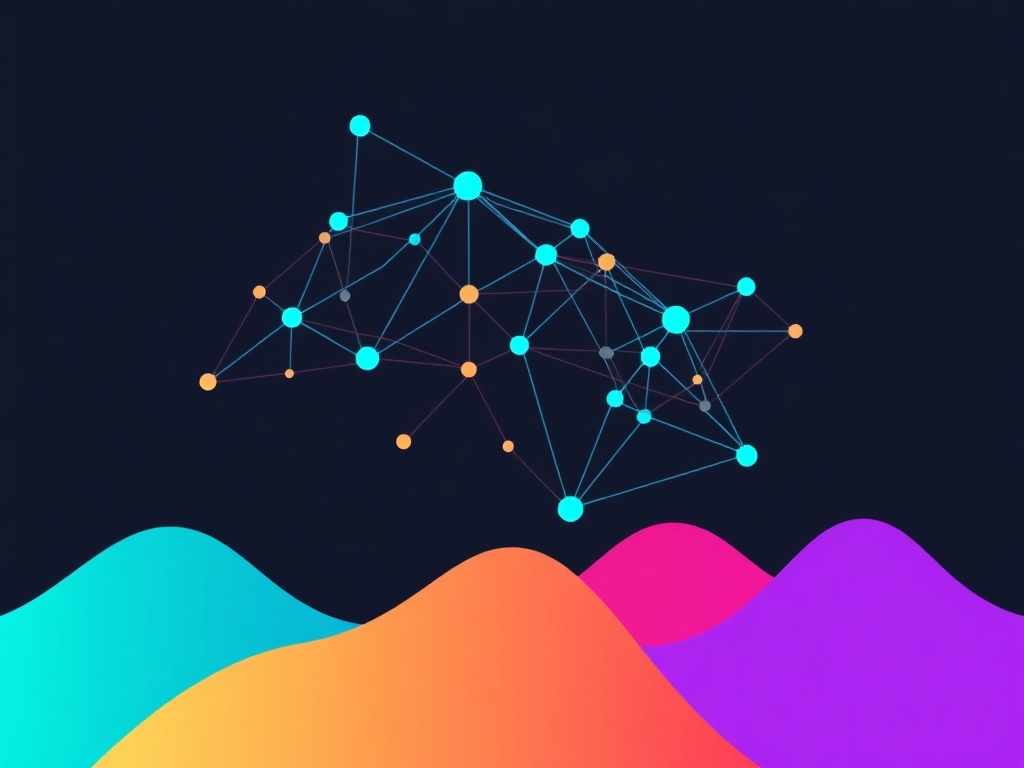
Graph theory provides the mathematical framework for representing and analyzing complex networks, including blockchain transaction graphs. A graph consists of nodes (representing entities such as Bitcoin addresses or users) and edges (representing transactions or interactions between these entities).
In the context of blockchain analysis, these graphs can become extremely large and complex, with millions of nodes and edges representing the entire transaction history of a cryptocurrency. The challenge lies in identifying meaningful patterns within these massive datasets, which is where graph community detection techniques come into play.
Key characteristics of blockchain transaction graphs include:
- Directed edges: Transactions flow from sender to receiver, creating directional relationships
- Weighted edges: Transaction amounts can be represented as edge weights
- Temporal dynamics: The graph evolves over time as new transactions occur
- High sparsity: Most addresses interact with only a small subset of the network
What is Community Detection in Graphs?
Graph community detection refers to the process of identifying groups of nodes that are more densely connected to each other than to the rest of the network. These groups, often called "communities" or "clusters," represent subgraphs where nodes share stronger or more frequent connections among themselves than with nodes outside the group.
In blockchain networks, communities often correspond to:
- Groups of addresses controlled by the same entity
- Mining pools and their associated addresses
- Exchanges and their deposit/withdrawal addresses
- Darknet markets and their transaction patterns
- Illegal activities such as money laundering or ransomware payments
The detection of these communities is crucial for understanding the structure and dynamics of blockchain ecosystems, as well as for identifying suspicious or anomalous behavior.
Why Community Detection Matters in Blockchain Analysis
The importance of graph community detection in blockchain analysis cannot be overstated. Traditional transaction analysis often focuses on individual transactions or addresses, but this approach fails to capture the broader patterns and relationships that define the network's structure. Community detection provides several key benefits:
- Entity resolution: Identifying groups of addresses controlled by the same entity (wallet clustering)
- Anomaly detection: Spotting unusual patterns that may indicate illicit activity
- Network visualization: Creating more interpretable representations of complex transaction graphs
- Risk assessment: Evaluating the risk associated with specific addresses or entities
- Regulatory compliance: Assisting in Know Your Customer (KYC) and Anti-Money Laundering (AML) efforts
As blockchain networks continue to grow in size and complexity, the ability to efficiently and accurately perform graph community detection becomes increasingly critical for maintaining the security and integrity of these decentralized systems.
Graph Community Detection Techniques for Blockchain Analysis
Several algorithms and approaches have been developed for graph community detection, each with its own strengths and weaknesses. The choice of technique depends on the specific requirements of the analysis, the size and characteristics of the graph, and the computational resources available.
Modularity-Based Community Detection
Modularity is one of the most widely used metrics for evaluating the quality of community partitions in a graph. Algorithms based on modularity optimization aim to find a partition of the graph that maximizes the modularity score, which measures the difference between the actual density of edges within communities and the expected density in a random graph.
The most popular modularity-based algorithm is the Louvain method, which efficiently identifies communities in large networks through an iterative process of:
- Local moving of nodes to optimize modularity
- Aggregation of nodes belonging to the same community
- Iteration on the aggregated network
Advantages of modularity-based approaches for graph community detection in blockchain networks include:
- High computational efficiency for large graphs
- Ability to handle weighted and directed graphs
- Good performance on real-world networks with clear community structure
However, modularity-based methods have some limitations:
- Tendency to produce communities of similar size (resolution limit problem)
- Sensitivity to the resolution parameter
- Difficulty in detecting overlapping communities
Spectral Clustering Methods
Spectral clustering is a powerful technique that leverages the eigenvalues and eigenvectors of the graph's Laplacian matrix to perform dimensionality reduction before clustering in a lower-dimensional space. This approach is particularly effective for graph community detection in blockchain transaction networks because it can capture both global and local structures.
The key steps in spectral clustering include:
- Constructing the graph Laplacian matrix
- Computing the eigenvectors corresponding to the smallest eigenvalues
- Applying a standard clustering algorithm (e.g., k-means) to the eigenvector matrix
For blockchain analysis, spectral methods offer several advantages:
- Ability to detect communities of varying sizes and densities
- Effective handling of sparse and disconnected graphs
- Interpretability through visualization of eigenvectors
However, spectral clustering can be computationally expensive for very large graphs, making it less suitable for real-time analysis of entire blockchain networks. Additionally, the choice of the number of clusters (k) can significantly impact the results.
Overlapping Community Detection Algorithms
In many blockchain networks, addresses and entities may belong to multiple communities simultaneously. For example, an exchange address might serve multiple trading pairs, or a mixing service might interact with various user groups. Traditional community detection methods that produce disjoint partitions are ill-suited for such scenarios, which is why overlapping community detection algorithms have gained prominence in graph community detection for blockchain analysis.
Several algorithms have been developed to detect overlapping communities:
- CPM (Clique Percolation Method): Identifies communities based on k-clique percolation, where communities are unions of adjacent k-cliques
- OSLOM (Order Statistics Local Optimization Method): Uses statistical significance to detect communities and their overlaps
- SLPA (Speaker-Listener Label Propagation Algorithm): A dynamic label propagation approach that allows nodes to belong to multiple communities
For blockchain transaction networks, overlapping community detection can reveal:
- Addresses that serve multiple purposes (e.g., exchanges acting as mixing services)
- Complex transaction patterns involving multiple entities
- Hierarchical structures within the network
While overlapping community detection provides more nuanced insights into blockchain networks, it also presents challenges in terms of computational complexity and result interpretation.
Deep Learning Approaches to Community Detection
Recent advances in deep learning have opened new possibilities for graph community detection, particularly in handling the massive scale and complexity of blockchain transaction networks. Neural network-based approaches can learn complex patterns and relationships directly from the graph data, often outperforming traditional methods in terms of accuracy and scalability.
Several deep learning architectures have been applied to community detection:
- Graph Neural Networks (GNNs): Learn node embeddings that capture both structural and attribute information
- Graph Autoencoders: Encode the graph structure into a latent space and decode it to identify communities
- Graph Attention Networks (GATs): Use attention mechanisms to weigh the importance of different nodes and edges
Advantages of deep learning approaches for graph community detection in blockchain networks include:
- Ability to handle very large and complex graphs
- Automatic feature learning without manual engineering
- Potential for real-time analysis with appropriate model architectures
- Integration with other machine learning tasks (e.g., anomaly detection)
However, deep learning methods also face challenges:
- High computational and data requirements for training
- Difficulty in interpreting the learned community structures
- Need for large labeled datasets for supervised approaches
- Potential for overfitting on specific blockchain networks
Applications of Graph Community Detection in Blockchain Analysis
The practical applications of graph community detection in blockchain analysis span multiple domains, from security and compliance to research and development. Understanding these applications can help organizations leverage community detection techniques to gain valuable insights into blockchain networks.
Wallet Clustering and Entity Resolution
One of the most important applications of graph community detection in blockchain analysis is wallet clustering, which involves grouping multiple addresses that are likely controlled by the same entity. This process is fundamental for understanding the true ownership structure of blockchain networks and for tracking the flow of funds across different addresses.
Traditional wallet clustering techniques rely on heuristics such as:
- Multi-input transactions: When multiple addresses are used as inputs to a single transaction, they are likely controlled by the same entity
- Change address detection: Identifying patterns that suggest certain addresses are used for returning change to the sender
- Behavioral patterns: Analyzing transaction timing, amounts, and frequency to infer common ownership
However, these heuristic methods have limitations and can produce false positives. Graph community detection provides a more robust approach by:
- Identifying dense subgraphs that likely represent single entities
- Detecting hierarchical structures within clusters
- Handling complex transaction patterns that challenge heuristic methods
For example, in Bitcoin analysis, community detection can help identify mining pools by detecting clusters of addresses that frequently interact with pool payout addresses. Similarly, it can reveal the structure of exchanges by identifying groups of addresses used for deposits, withdrawals, and cold storage.
Illicit Activity Detection and Anti-Money Laundering
The detection of illicit activities such as money laundering, ransomware payments, and darknet market transactions is a critical application of graph community detection in blockchain analysis. By identifying anomalous community structures and transaction patterns, analysts can flag suspicious activities for further investigation.
Key indicators of illicit activity that can be detected through community analysis include:
- Tumbler or mixing service patterns: Communities with high in-degree and out-degree centralization, indicating the use of mixing services
- Rapid fund movement: Communities with high transaction velocity, suggesting attempts to obscure fund origins
- Concentration of funds: Small communities with large amounts of funds, potentially indicating the consolidation of illicit proceeds
- Bridge communities: Groups of addresses that connect otherwise disconnected parts of the network, often used in money laundering schemes
For instance, graph community detection can help identify the "peeling chain" pattern often used in Bitcoin mixing, where a large amount is gradually split into smaller amounts sent to different addresses. By detecting the characteristic community structure of such patterns, analysts can more effectively identify and track money laundering activities.
In addition to detection, community analysis can assist in tracing the flow of illicit funds through the network. By understanding the community structure, analysts can identify key addresses and transaction paths that are most likely to be involved in illicit activities, even when direct evidence is not available.
Network Visualization and Exploratory Analysis
Visualizing blockchain transaction networks is a challenging task due to their massive scale and complexity. Graph community detection plays a crucial role in creating more interpretable and meaningful visualizations by reducing the complexity of the network and highlighting its structural features.
Community detection enables several visualization techniques:
- Community-based aggregation: Representing each community as a single node in a higher-level graph
- Force-directed layouts: Positioning nodes within communities close to each other while maintaining separation between communities
- Hierarchical visualization: Showing multiple levels of community structure simultaneously
- Inter-community edges: Highlighting connections between communities to reveal network flow patterns
For blockchain analysts, these visualizations can reveal:
- The overall structure of the network and its major components
- Key entities and their relationships within the network
- Anomalous patterns or outliers that warrant further investigation
- The impact of specific events (e.g., exchange hacks, regulatory actions) on network structure
Tools like Gephi, Cytoscape, and custom blockchain visualization platforms often incorporate community detection algorithms to enhance their analytical capabilities. By leveraging these techniques, analysts can gain deeper insights into the dynamics of blockchain networks and communicate their findings more effectively.
Regulatory Compliance and Risk Assessment
As blockchain technology becomes more integrated into the global financial system, regulatory compliance has become a major concern for businesses and organizations operating in this space. Graph community detection plays an increasingly important role in helping organizations meet their compliance obligations and assess the risk associated with blockchain transactions.
Key applications in regulatory compliance include:
- KYC/AML screening: Identifying high-risk addresses or entities based on their community membership and transaction patterns
- Sanctions screening: Detecting addresses or communities associated with sanctioned entities or jurisdictions
- Transaction monitoring: Flagging suspicious transactions based on their community context and historical patterns
- Due diligence: Assessing the risk profile of potential business partners or customers based on their network position and community affiliations
For example, a cryptocurrency exchange might use graph community detection to:
- Identify addresses associated with known darknet markets or ransomware groups
- Assess the risk of incoming transactions based on the sender's community membership
- Monitor the flow of funds through high-risk communities
- Generate reports for regulatory authorities on suspicious activities
By incorporating community detection into their compliance workflows, organizations can more effectively identify and mitigate risks associated with blockchain transactions, while also demonstrating their commitment to regulatory compliance to authorities and customers.
Challenges and Limitations in Graph Community Detection for Blockchain Networks
While graph community detection offers powerful capabilities for analyzing blockchain networks, it also faces several challenges and limitations that must be addressed to ensure accurate and reliable results. Understanding these challenges is crucial for practitioners looking to implement community detection techniques in their blockchain analysis workflows.
Scalability and Computational Complexity
One of the most significant challenges in applying graph community detection to blockchain networks is the sheer scale of the data. Bitcoin alone has over 1 billion transactions and hundreds of millions of addresses, creating graphs with millions or even billions of nodes and edges. This scale presents several computational challenges:
- Memory requirements: Storing and processing such large graphs requires significant memory resources
- Computational time: Many community detection algorithms have high time complexity, making them impractical for real-time analysis
- Distributed processing: Handling large-scale graphs often requires distributed computing frameworks like Apache Spark or GraphX
- Approximation algorithms: For real-time applications, approximate algorithms may be necessary to achieve acceptable performance
Several approaches have been developed to address these scalability challenges:
- Graph sampling: Analyzing a representative subset of the graph rather than the entire network
- Streaming algorithms: Processing the graph in a streaming fashion to reduce memory requirements
- Parallel and distributed implementations: Leveraging multiple processors or machines to speed up computation
- <
 David ChenDigital Assets Strategist
Graph Community Detection: Unlocking Hidden Patterns in Digital Asset Networks
As a digital assets strategist with a background in quantitative finance and on-chain analytics, I’ve long recognized that the true value of blockchain networks lies not just in their transactional data but in the structural relationships between participants. Graph community detection has emerged as a powerful tool to decode these relationships, revealing clusters of interconnected addresses that often represent trading syndicates, mining pools, or even illicit activities. Unlike traditional financial networks, where counterparty relationships are often opaque, blockchain’s transparent ledger allows us to model these interactions as graphs—where nodes are addresses and edges are transactions. By applying community detection algorithms like Louvain or Leiden, we can identify natural groupings that may signal coordinated behavior, liquidity provision patterns, or potential systemic risks before they materialize in price movements.
From a practical standpoint, graph community detection is indispensable for risk management and alpha generation in digital asset markets. For instance, in DeFi protocols, detecting tightly knit communities can help identify liquidity concentration risks or front-running opportunities. In the context of regulatory compliance, these methods can flag suspicious transaction patterns that warrant further investigation, such as money laundering or wash trading. I’ve applied these techniques to optimize portfolio construction by avoiding overconcentration in correlated asset clusters, much like how traditional finance uses sector analysis but with the granularity of on-chain data. The key takeaway? Graph community detection isn’t just an academic exercise—it’s a competitive edge for those who can translate structural insights into actionable trading or risk strategies.