Monero vs Tornado Cash Comparison: Privacy, Security, and Use Cases in 2024
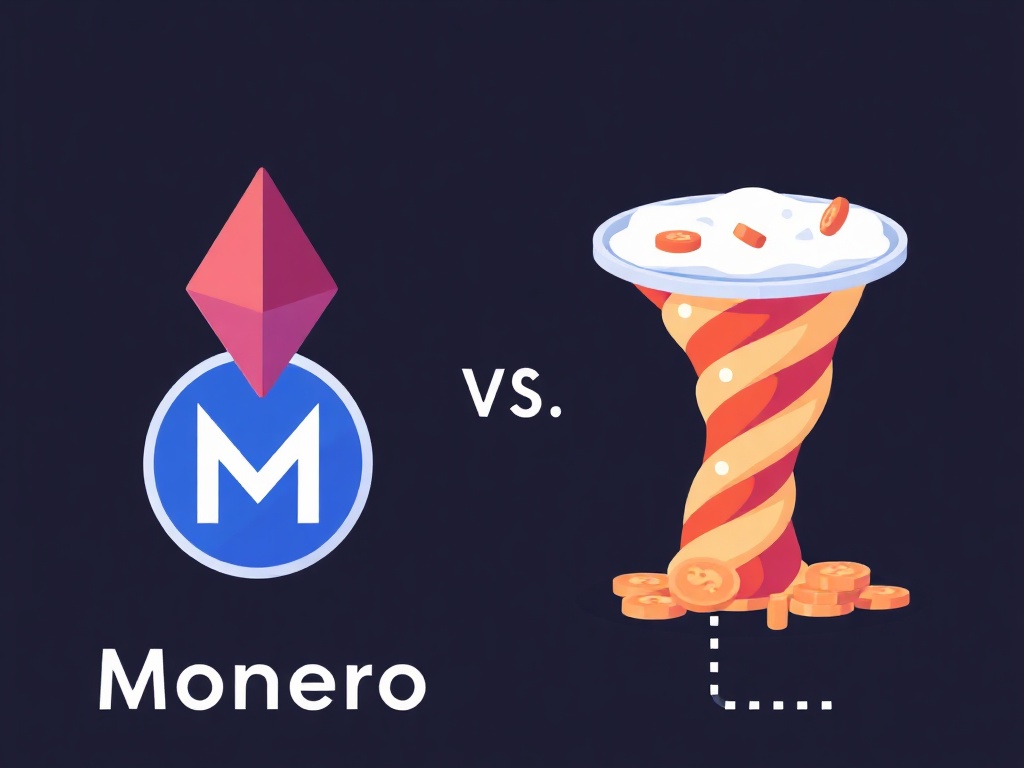
In the rapidly evolving world of cryptocurrency privacy solutions, Monero vs Tornado Cash comparison has become a hot topic among privacy-conscious users, investors, and regulators. Both platforms offer anonymity features, but they operate on fundamentally different principles, technologies, and philosophies. This comprehensive guide explores the key differences, similarities, and practical implications of using Monero and Tornado Cash in 2024.
As governments worldwide tighten regulations on financial privacy, understanding the nuances between these two privacy tools is crucial. Whether you're a trader, investor, or simply someone who values financial sovereignty, this Monero vs Tornado Cash comparison will help you make an informed decision about which solution best fits your needs.
Understanding the Core Technologies Behind Monero and Tornado Cash
How Monero Achieves Privacy Through Ring Signatures and Stealth Addresses
Monero (XMR) is a privacy-focused cryptocurrency that was launched in 2014 as a fork of Bytecoin. Unlike Bitcoin, which operates on a transparent ledger, Monero employs several advanced cryptographic techniques to obscure transaction details:
- Ring Signatures: These allow a transaction to be signed by one member of a group, without revealing which specific member signed it. This makes it impossible to trace the origin of a transaction.
- Stealth Addresses: Each transaction generates a one-time address for the recipient, preventing anyone from linking transactions to a user's public address.
- Ring Confidential Transactions (RingCT): This protocol hides the transaction amount while still ensuring the transaction is valid.
- Kovri (formerly known as I2P integration): While not always active, this feature can further obscure transaction metadata by routing traffic through the I2P network.
These technologies work together to create a default-private blockchain, meaning all transactions are private by default unless explicitly made transparent (which is rare and discouraged).
How Tornado Cash Uses Zero-Knowledge Proofs for Privacy
Tornado Cash, on the other hand, is a mixing service built on Ethereum and other EVM-compatible blockchains. Unlike Monero, which is a standalone privacy coin, Tornado Cash operates as a decentralized application (dApp) that mixes cryptocurrency deposits to break the on-chain link between source and destination addresses.
The core technology behind Tornado Cash includes:
- Zero-Knowledge Proofs (ZKPs): Specifically, Tornado Cash uses zk-SNARKs (Zero-Knowledge Succinct Non-Interactive Arguments of Knowledge) to prove that a user has deposited funds without revealing which specific deposit they are withdrawing.
- Smart Contracts: Tornado Cash is governed by smart contracts deployed on Ethereum and other chains, which manage the mixing pools and enforce the privacy guarantees.
- Relayers: Users can withdraw funds through relayers, which pay the gas fees on their behalf in exchange for a small fee, further enhancing privacy by preventing direct links between deposits and withdrawals.
Unlike Monero, Tornado Cash does not natively obscure transaction amounts or addresses. Instead, it focuses on breaking the transaction graph—the chain of links between addresses that can reveal user behavior.
Privacy Mechanisms: A Deep Dive into Monero vs Tornado Cash
Transaction Privacy: Native vs. Layered Solutions
When conducting a Monero vs Tornado Cash comparison, the most fundamental difference lies in how each platform achieves privacy:
| Feature | Monero | Tornado Cash |
|---|---|---|
| Privacy Model | Native privacy (all transactions are private by default) | Layered privacy (requires manual mixing of transparent assets) |
| Address Privacy | Stealth addresses hide recipient identities | No native address privacy; relies on mixing pools |
| Transaction Amount Privacy | RingCT hides transaction values | No native amount privacy; amounts are visible until mixed |
| Chain Privacy | Fungible by design (all XMR are equal) | Non-fungible until mixed (original tokens may be tainted) |
This table highlights why Monero is often considered a more robust privacy solution. With Monero, privacy is not an optional feature—it's the default state of the network. In contrast, Tornado Cash requires users to actively participate in the mixing process, which can be cumbersome and may not fully obscure all transaction metadata.
Fungibility: Why Monero Excels Where Tornado Cash Falls Short
Fungibility refers to the interchangeability of units within an asset. In the context of cryptocurrency privacy, fungibility is critical because it ensures that no single unit of a currency can be blacklisted or traced back to illicit activity.
Monero was designed with fungibility in mind. Every Monero unit is identical in the eyes of the blockchain, making it impossible to distinguish between "clean" and "tainted" coins. This is a direct result of Monero's privacy features, which obscure transaction histories at the protocol level.
Tornado Cash, however, does not achieve the same level of fungibility. When users deposit tokens into a Tornado Cash pool, those tokens retain their original transaction history. While mixing breaks the direct link between deposits and withdrawals, the original tokens may still carry metadata that could be used to trace them. This means that Tornado Cash-mixed funds could potentially be flagged by exchanges or regulators as "suspicious," undermining the very privacy it aims to provide.
For users who prioritize absolute financial privacy, Monero's native fungibility makes it the superior choice in a Monero vs Tornado Cash comparison.
Security Considerations: Risks and Vulnerabilities in Privacy Tools
Monero's Security Model: Strengths and Potential Weaknesses
Monero's security is built on a combination of cryptographic innovations and a decentralized network. However, no system is entirely immune to risks. Some key security considerations for Monero include:
- Quantum Computing Threats: While Monero's cryptographic primitives (such as EdDSA signatures) are currently quantum-resistant, advances in quantum computing could pose future risks.
- Regulatory Pressure: Monero has faced scrutiny from regulators, particularly in the EU and US, where authorities have expressed concerns about its use in illicit activities. Some exchanges have delisted Monero, limiting its usability.
- Node Centralization: Running a Monero node requires significant resources, which has led to centralization concerns. A small number of nodes control a large portion of the network's hash power.
- Transaction Malleability: While rare, there have been instances where transaction malleability (the ability to alter transaction IDs) has been exploited in Monero, though the network has implemented fixes.
Despite these risks, Monero remains one of the most secure privacy-focused cryptocurrencies, with a strong track record of resisting attacks and maintaining network integrity.
Tornado Cash's Security Challenges: Smart Contract Risks and Regulatory Scrutiny
Tornado Cash's security model is more complex than Monero's due to its reliance on smart contracts and external relayers. Some of the key security risks associated with Tornado Cash include:
- Smart Contract Vulnerabilities: Tornado Cash's smart contracts have been audited, but like all complex systems, they are not immune to bugs. In 2022, a critical vulnerability in Tornado Cash's Ethereum contracts was discovered, which could have allowed attackers to drain funds from the mixing pools.
- Front-Running Attacks: Because Tornado Cash relies on relayers to process withdrawals, there is a risk of front-running, where malicious actors could manipulate transaction order to deanonymize users.
- Regulatory Crackdowns: Tornado Cash has faced severe regulatory backlash, particularly from the US Office of Foreign Assets Control (OFAC), which sanctioned the protocol in August 2022. This has led to the blacklisting of Tornado Cash-related addresses and the delisting of the TORN token from major exchanges.
- Relayer Trust Issues: While Tornado Cash encourages the use of decentralized relayers, users must still trust that relayers will not log or manipulate withdrawal requests. Centralized relayers pose a significant privacy risk.
These security challenges make Tornado Cash a riskier choice for users who prioritize both privacy and regulatory compliance. In a Monero vs Tornado Cash comparison, Monero's decentralized and protocol-level privacy gives it a clear advantage in terms of security.
Use Cases: When to Choose Monero Over Tornado Cash (and Vice Versa)
Monero for Everyday Privacy and Long-Term Holders
Monero is ideal for users who require continuous privacy without the need for manual intervention. Some of the best use cases for Monero include:
- Everyday Transactions: Monero can be used for payments, remittances, and purchases without the fear of transaction history being exposed. This makes it ideal for individuals living in countries with oppressive financial surveillance.
- Long-Term Investments: Because Monero is fungible and private by default, it is a preferred choice for investors who want to hold a privacy-focused asset without worrying about tainted coins.
- Business Transactions: Companies that require financial privacy for competitive or security reasons can use Monero to conduct transactions without revealing sensitive business data.
- Censorship Resistance: Monero's decentralized nature makes it resistant to censorship, ensuring that users can transact freely without interference from governments or financial institutions.
For these use cases, Monero's native privacy features make it the clear winner in a Monero vs Tornado Cash comparison.
Tornado Cash for Ethereum Users and Short-Term Privacy Needs
Tornado Cash is better suited for users who are already deeply integrated into the Ethereum ecosystem and require a temporary privacy solution. Some of the best use cases for Tornado Cash include:
- DeFi Transactions: Users who interact with decentralized finance (DeFi) protocols may use Tornado Cash to obscure the source of their funds, particularly when moving large amounts of ETH or ERC-20 tokens.
- NFT Purchases: Collectors who want to keep their NFT purchases private may use Tornado Cash to break the link between their public Ethereum address and their NFT transactions.
- Cross-Chain Transactions: While Tornado Cash primarily operates on Ethereum, it also supports other EVM-compatible chains like Polygon and Arbitrum. This makes it useful for users who need privacy across multiple blockchains.
- Short-Term Anonymity: Unlike Monero, which provides permanent privacy, Tornado Cash is designed for short-term anonymity. Users can withdraw their funds after a mixing session, making it ideal for one-time privacy needs.
However, users should be aware of the regulatory risks associated with Tornado Cash, particularly in jurisdictions with strict financial surveillance laws.
Regulatory Landscape: How Governments View Monero and Tornado Cash
Monero's Struggle with Global Regulatory Scrutiny
Monero's privacy features have made it a target for regulators worldwide. Some key regulatory challenges facing Monero include:
- Exchange Delistings: Major cryptocurrency exchanges, including Binance, Kraken, and Coinbase, have delisted Monero in certain jurisdictions due to regulatory concerns. This limits Monero's usability and liquidity.
- Travel Rule Compliance: The Financial Action Task Force (FATF) has imposed strict Travel Rule requirements on cryptocurrency exchanges, which are difficult to comply with for privacy coins like Monero. This has led to increased scrutiny and restrictions on Monero trading.
- Government Bans: Countries like South Korea and Japan have either banned or restricted the use of Monero, citing concerns about money laundering and illicit activities.
- Banking Restrictions: Some banks have refused to process transactions involving Monero, making it difficult for users to cash out their holdings.
Despite these challenges, Monero remains widely used in jurisdictions with strong privacy protections, such as Switzerland, Portugal, and parts of the US.
Tornado Cash's Legal Battle: OFAC Sanctions and Global Impact
Tornado Cash's regulatory situation is even more precarious than Monero's. In August 2022, the US Treasury's Office of Foreign Assets Control (OFAC) sanctioned Tornado Cash, effectively banning US citizens and residents from using the protocol. This was a landmark decision that set a precedent for the regulation of privacy tools in the cryptocurrency space.
Key regulatory developments surrounding Tornado Cash include:
- OFAC Sanctions: The OFAC sanctions prohibit US persons from interacting with Tornado Cash or any addresses associated with the protocol. Violators could face severe penalties, including fines and imprisonment.
- Global Crackdowns: Following the US sanctions, other countries, including South Korea and Singapore, have also taken steps to restrict Tornado Cash's use. Some exchanges have delisted the TORN token entirely.
- Legal Challenges: Tornado Cash's developers have faced legal repercussions, with one of its co-founders, Alexey Pertsev, being arrested in the Netherlands and charged with facilitating money laundering.
- Decentralization Debate: The Tornado Cash case has sparked a debate about the legal status of decentralized protocols. While Tornado Cash is decentralized in theory, the US government has treated it as a centralized entity, raising questions about the future of privacy tools in a regulated world.
For users in regulated jurisdictions, Tornado Cash poses significant legal risks. In a Monero vs Tornado Cash comparison, Monero, while also facing regulatory challenges, remains a more viable option for users who prioritize legal compliance while still seeking financial privacy.
Performance and Usability: Which Privacy Solution is More Practical?
Transaction Speed and Cost: Monero's Advantage
When comparing the practicality of Monero and Tornado Cash, transaction speed and cost are critical factors. Monero's blockchain is optimized for fast and low-cost transactions, making it ideal for everyday use.
- Block Time: Monero has a block time of approximately 2 minutes, compared to Ethereum's 12-15 seconds (though Tornado Cash transactions are subject to Ethereum's gas fees).
- Transaction Fees: Monero's fees are typically less than $0.50, making it one of the most affordable privacy solutions available. In contrast, Tornado Cash transactions on Ethereum can cost anywhere from $5 to $50, depending on network congestion.
- Scalability: Monero's dynamic block size and fee structure allow it to handle increased transaction volumes without significant fee spikes. Tornado Cash, on the other hand, is constrained by Ethereum's scalability limitations.
For users who need a fast, affordable, and private cryptocurrency, Monero is the clear winner in terms of performance and usability.
Ease of Use: Tornado Cash's Learning Curve
Tornado Cash, while powerful, has a steeper learning curve compared to Monero. Users must understand concepts like zero-knowledge proofs, relayers, and smart contracts to use the platform effectively. Some key usability challenges include:
- Wallet Compatibility: Tornado Cash requires users to interact with Ethereum wallets like MetaMask, which can be intimidating for beginners. Monero, on the other hand, can be used with simple, user-friendly wallets like Cake Wallet or Monero GUI.
- Manual Mixing Process: Unlike Monero, where privacy is automatic, Tornado Cash requires users to manually deposit and withdraw funds from mixing pools. This process can be confusing and error-prone for new users.
- Gas Fees: As mentioned earlier, Tornado Cash transactions on Ethereum incur significant gas fees, which can deter casual users. Monero's fees are negligible in comparison.
- Relayer Dependence: Users must either run their own relayer or
 Emily ParkerCrypto Investment Advisor
Monero vs Tornado Cash Comparison: Privacy Solutions in a Regulated World
As a crypto investment advisor with over a decade of experience, I’ve seen firsthand how privacy-focused tools like Monero and Tornado Cash have reshaped the digital asset landscape. The Monero vs Tornado Cash comparison isn’t just about technical differences—it’s about understanding the trade-offs between absolute privacy and regulatory compliance. Monero, with its built-in privacy features like ring signatures and stealth addresses, offers a truly anonymous transaction experience. This makes it attractive for users prioritizing financial confidentiality. However, its lack of traceability has also drawn scrutiny from regulators, particularly in jurisdictions like the U.S. and EU, where compliance with AML (Anti-Money Laundering) laws is non-negotiable.
Tornado Cash, on the other hand, operates as a decentralized mixer, allowing users to obfuscate transaction trails by pooling and redistributing funds. While it provides a layer of privacy, its reliance on smart contracts and Ethereum’s transparent ledger means it’s not as inherently private as Monero. The Monero vs Tornado Cash comparison becomes critical for investors weighing privacy against usability. Tornado Cash’s recent legal challenges—including its designation as a sanctioned entity by the U.S. Treasury—highlight the risks of centralized regulatory backlash. For institutional or compliance-conscious investors, Monero’s native privacy may offer a more sustainable long-term solution, albeit with potential exchange delistings or geoblocking. Ultimately, the choice hinges on risk tolerance: Monero for those who prioritize privacy above all, and Tornado Cash for those navigating a more regulated environment.