The Impact of Tornado Cash Sanctions on Privacy, Compliance, and the Future of Cryptocurrency Mixers
The Tornado Cash sanctions imposed by the U.S. Department of the Treasury in August 2022 marked a pivotal moment in the cryptocurrency ecosystem. These sanctions, targeting the decentralized privacy protocol Tornado Cash, sent shockwaves through the blockchain community, raising critical questions about financial privacy, regulatory compliance, and the ethical use of cryptocurrency mixers. As governments worldwide grapple with the balance between privacy and illicit activity prevention, the Tornado Cash sanctions have become a focal point for debates on decentralization, censorship resistance, and the future of financial anonymity in the digital age.
In this comprehensive guide, we explore the origins of Tornado Cash, the implications of the Tornado Cash sanctions, their impact on users and developers, and the broader consequences for the cryptocurrency industry. Whether you're a privacy advocate, a compliance professional, or a curious observer, understanding the Tornado Cash sanctions is essential to navigating the evolving landscape of decentralized finance (DeFi) and blockchain technology.
The Rise of Tornado Cash: A Privacy Protocol in the Crosshairs
What Is Tornado Cash and How Does It Work?
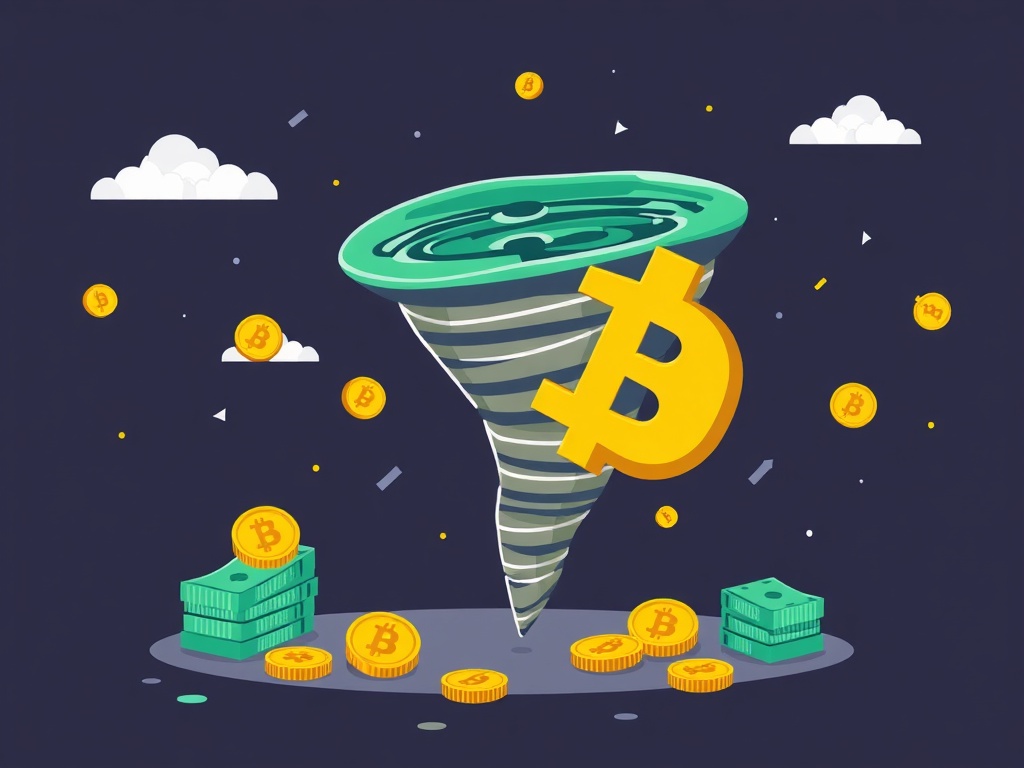
Tornado Cash is a cryptocurrency mixer—a decentralized protocol designed to enhance transaction privacy by obfuscating the origin and destination of digital assets. Unlike traditional financial systems where transactions are traceable on public ledgers, Tornado Cash leverages zero-knowledge proofs (ZKPs) to allow users to deposit and withdraw cryptocurrency without revealing their identities or transaction histories.
The protocol operates by pooling funds from multiple users and redistributing them in a way that severs the on-chain link between deposits and withdrawals. For example, a user depositing Ethereum (ETH) into Tornado Cash receives a cryptographic receipt (a note). When they later withdraw the funds, they can prove ownership of the note without disclosing which specific deposit it corresponds to. This process ensures that external observers, including blockchain analysts and regulators, cannot trace the flow of funds.
Tornado Cash gained significant traction in the DeFi space due to its ability to provide financial privacy—a feature increasingly scarce in an era of pervasive surveillance and blockchain transparency. Its open-source nature and permissionless design made it accessible to anyone with an internet connection, further democratizing financial anonymity.
The Growing Demand for Privacy in Cryptocurrency
The need for privacy in cryptocurrency has intensified as governments and corporations expand their surveillance capabilities. Public blockchains like Ethereum and Bitcoin are inherently transparent, meaning every transaction is recorded on an immutable ledger accessible to anyone. While pseudonymity is possible, sophisticated blockchain analysis tools can often deanonymize users by tracing transaction patterns, IP addresses, and wallet interactions.
For individuals living under oppressive regimes, whistleblowers, or simply privacy-conscious users, tools like Tornado Cash offer a lifeline. They provide a way to conduct financial transactions without fear of retaliation, censorship, or exploitation. The protocol's popularity surged during periods of geopolitical instability, such as the 2022 Russian invasion of Ukraine, where users sought to protect their assets from seizure or tracking by authorities.
However, the same features that made Tornado Cash valuable to privacy advocates also made it a target for regulators. The Tornado Cash sanctions were not an isolated incident but part of a broader crackdown on tools perceived as facilitating illicit finance.
Regulatory Concerns and the Dark Side of Mixers
While Tornado Cash was designed with legitimate privacy use cases in mind, its misuse by bad actors has been a persistent concern for governments. Cryptocurrency mixers have been linked to money laundering, ransomware payments, and sanctions evasion. For instance, the Lazarus Group, a North Korean hacking collective, allegedly used Tornado Cash to launder hundreds of millions of dollars stolen from cryptocurrency exchanges.
The U.S. Treasury's Office of Foreign Assets Control (OFAC) argued that Tornado Cash's failure to implement adequate compliance measures made it complicit in these activities. In their official statement announcing the Tornado Cash sanctions, OFAC stated:
"Tornado Cash has repeatedly failed to impose effective controls designed to stop it from laundering funds for malicious cyber actors on a regular basis and without basic measures to address its risks."
This rationale underscored the tension between privacy and regulatory oversight—a tension that would define the aftermath of the sanctions.
Understanding the Tornado Cash Sanctions: What Happened and Why?
The Official Sanctions Announcement
On August 8, 2022, the U.S. Department of the Treasury's OFAC added Tornado Cash and its associated smart contracts to the Specially Designated Nationals (SDN) list. This designation effectively banned U.S. individuals and entities from interacting with Tornado Cash, including using its services, holding its tokens, or facilitating transactions through its protocol.
The sanctions were unprecedented in several ways:
- First-time targeting of a decentralized protocol: Unlike previous sanctions that focused on individuals or centralized entities, the Tornado Cash sanctions applied to a decentralized autonomous organization (DAO) with no central authority.
- Inclusion of smart contracts: OFAC listed specific Ethereum smart contract addresses associated with Tornado Cash, making it illegal for U.S. citizens to interact with them.
- Global implications: While the sanctions were issued by the U.S., they had ripple effects worldwide, as many cryptocurrency exchanges and service providers adopted similar restrictions to avoid regulatory scrutiny.
Legal and Technical Challenges of Enforcing the Sanctions
The decentralized nature of Tornado Cash posed significant challenges for enforcement. Unlike a traditional bank or corporation, Tornado Cash had no CEO, no headquarters, and no employees. Its code was open-source and deployed on the Ethereum blockchain, meaning it could not be "shut down" in the conventional sense.
Instead, OFAC's approach relied on:
- Smart contract blacklisting: By adding the Tornado Cash smart contract addresses to the SDN list, OFAC made it illegal for U.S. persons to interact with these contracts, even if they were merely using the protocol as intended.
- Secondary sanctions risk: Entities outside the U.S. that facilitated transactions with Tornado Cash risked facing penalties, creating a chilling effect on global adoption.
- Pressure on centralized exchanges: Major exchanges like Coinbase and Kraken were compelled to freeze assets linked to Tornado Cash addresses, further isolating the protocol.
However, the sanctions also sparked a debate about the legality of targeting code rather than individuals. Critics argued that the Tornado Cash sanctions set a dangerous precedent by criminalizing the use of open-source software, a cornerstone of the cryptocurrency movement.
The Ethical and Philosophical Debate
The Tornado Cash sanctions ignited a firestorm of controversy within the crypto community and beyond. Supporters of the sanctions argued that they were a necessary step to combat illicit finance and protect national security. They pointed to the protocol's widespread use in money laundering schemes, including the laundering of funds stolen in high-profile hacks.
On the other hand, privacy advocates and decentralization purists condemned the sanctions as an overreach that threatened fundamental freedoms. They contended that:
- Innocent users were collateral damage: Many law-abiding individuals used Tornado Cash for legitimate privacy reasons, such as protecting their financial data from corporate or government surveillance.
- Censorship of code violates free speech: Some legal experts compared the sanctions to banning a book or a mathematical algorithm, arguing that open-source software should be protected under free speech principles.
- The sanctions were ineffective: By driving Tornado Cash underground, the sanctions may have pushed its usage into less transparent channels, making it harder for authorities to track illicit activity.
This ethical divide highlighted the broader struggle between privacy and regulation in the digital age—a struggle that continues to shape the future of cryptocurrency.
The Ripple Effects: How the Tornado Cash Sanctions Changed the Crypto Landscape
Impact on Users: Fear, Confusion, and Exodus
The immediate aftermath of the Tornado Cash sanctions was marked by panic and uncertainty among users. Many who had previously relied on Tornado Cash for privacy found themselves in uncharted legal territory. The sanctions created a climate of fear, as users worried about potential legal repercussions for simply holding or transacting with Tornado Cash-related assets.
Several key consequences emerged:
- Asset seizures and frozen funds: Some users reported that their cryptocurrency holdings were frozen by exchanges or wallet providers due to associations with Tornado Cash addresses. In one notable case, a Dutch developer was arrested for allegedly facilitating Tornado Cash transactions, raising concerns about the criminalization of code contributors.
- Shift to alternative mixers: In response to the sanctions, many users migrated to other privacy-focused protocols, such as Wasabi Wallet (for Bitcoin) or Hopr (a decentralized privacy network). However, these alternatives often lacked the same level of sophistication or user adoption as Tornado Cash.
- Increased self-custody: Some users opted to withdraw their funds from exchanges and manage them directly, seeking to avoid the scrutiny of centralized entities that might be pressured by regulators.
The sanctions also had a chilling effect on the broader cryptocurrency community. Developers working on privacy-enhancing technologies became more cautious about open-sourcing their code, fearing similar regulatory backlash. This shift threatened the collaborative, innovation-driven ethos of the crypto space.
The Developer Dilemma: Compliance vs. Decentralization
Tornado Cash was not just a tool but a community-driven project maintained by a decentralized autonomous organization (DAO). The Tornado Cash sanctions forced developers and contributors to confront difficult questions about their roles and responsibilities in a regulated environment.
Key challenges included:
- Legal exposure for contributors: Some developers who had contributed to Tornado Cash's codebase faced legal scrutiny. In August 2022, a Dutch developer was arrested on suspicion of involvement in money laundering, though he was later released without charges. This incident sent a clear message to the developer community: contributing to privacy tools could carry significant risks.
- Compliance measures and censorship: In an attempt to comply with regulations, some projects began implementing travel rule compliance tools or chain analysis filters. However, these measures often conflicted with the core principles of decentralization and censorship resistance.
- Forking and rebranding: In response to the sanctions, several forks of Tornado Cash emerged, such as Tornado Cash Nova and Privacy Pools. These projects aimed to distance themselves from the original protocol while offering similar functionality. However, their long-term viability remained uncertain in the face of regulatory uncertainty.
The developer dilemma underscored a fundamental tension in the crypto space: How can decentralized projects balance compliance with the ethos of permissionless innovation? The Tornado Cash sanctions forced the industry to grapple with this question in real time.
Exchanges and Service Providers: The Compliance Domino Effect
The Tornado Cash sanctions had a cascading effect on cryptocurrency exchanges, wallet providers, and other service providers. Fearing regulatory penalties, many centralized entities took proactive steps to distance themselves from Tornado Cash and similar protocols.
Notable reactions included:
- Delisting and freezing: Major exchanges like Coinbase, Kraken, and Binance announced that they would freeze or delist assets associated with Tornado Cash addresses. Some users found their funds inaccessible without explanation.
- Enhanced due diligence: Exchanges ramped up their compliance efforts, implementing stricter know-your-customer (KYC) and anti-money laundering (AML) procedures. This shift contributed to the broader trend of increasing surveillance in the crypto industry.
- Geographic restrictions: Some services restricted access to privacy tools based on users' locations, further fragmenting the global cryptocurrency ecosystem.
While these measures were intended to demonstrate compliance, they also highlighted the growing centralization of power within the crypto industry. As exchanges and service providers became more beholden to regulators, the dream of a truly decentralized financial system seemed increasingly distant.
The Broader Implications for Privacy in Cryptocurrency
The Tornado Cash sanctions were not just about one protocol—they were a bellwether for the future of privacy in cryptocurrency. The sanctions sent a clear message to the industry: Privacy tools that fail to implement adequate compliance measures will face severe consequences.
This message had several implications:
- Increased scrutiny on all mixers: Projects like Wasabi Wallet, Samourai Wallet, and JoinMarket faced heightened regulatory attention, leading to self-censorship and compliance efforts.
- Shift toward regulated privacy: Some projects began exploring compliant privacy solutions, such as zk-SNARKs with built-in compliance features. However, these solutions often came at the cost of true decentralization.
- Rise of decentralized identity solutions: Projects like BrightID and Proof of Personhood emerged as alternatives to traditional KYC, aiming to provide privacy-preserving identity verification.
The sanctions also sparked a broader conversation about the role of privacy in a digital economy. As blockchain analysis firms like Chainalysis and TRM Labs become more sophisticated, the ability to achieve true financial anonymity grows increasingly challenging. The Tornado Cash sanctions served as a reminder that privacy in cryptocurrency is not guaranteed—it must be actively defended and innovated.
The Future of Tornado Cash and Cryptocurrency Privacy: Challenges and Opportunities
Is Tornado Cash Dead? The Protocol’s Resilience and Evolution
Despite the Tornado Cash sanctions, the protocol did not disappear—it evolved. The decentralized nature of Tornado Cash made it resilient to censorship, and its community continued to develop alternatives and forks in response to the regulatory crackdown.
Key developments included:
- Tornado Cash Nova: A fork of the original protocol, Nova introduced a new interface and additional features while maintaining the core privacy functionality. It aimed to distance itself from the original project to avoid regulatory scrutiny.
- Privacy Pools: This experimental project sought to combine privacy with compliance by allowing users to prove their funds were not associated with illicit activity. However, its implementation raised questions about the feasibility of "regulated privacy."
- Decentralized frontends: To evade censorship, community members launched decentralized frontends for Tornado Cash, such as tornadocash.eth on the Ethereum Name Service (ENS). These frontends were harder to take down than centralized alternatives.
The resilience of Tornado Cash demonstrated the inherent strength of decentralized systems. While the protocol faced significant challenges, its community-driven ethos ensured its survival in some form. However, the long-term viability of Tornado Cash and its forks remained uncertain in the face of ongoing regulatory pressure.
Regulatory Trends: What’s Next for Cryptocurrency Mixers?
The Tornado Cash sanctions set a precedent that is likely to shape future regulatory actions against privacy tools. Governments worldwide are increasingly focused on combating illicit finance, and cryptocurrency mixers are a prime target. Several trends are emerging:
- Global coordination on sanctions: The U.S. is not alone in targeting privacy tools. The European Union's Markets in Crypto-Assets Regulation (MiCA) and other jurisdictions are also exploring stricter AML requirements for mixers.
- Focus on decentralized finance (DeFi): Regulators are turning their attention to DeFi protocols that enable privacy or anonymity, such as Aztec and Tornado Cash derivatives. The challenge lies in applying traditional financial regulations to decentralized systems.
- Increased use of blockchain analysis: Tools like Chainalysis are becoming more sophisticated, enabling authorities to trace funds through mixers with greater accuracy. This trend may reduce the effectiveness of privacy tools over time.
For the cryptocurrency industry, the path forward is fraught with challenges. Striking a balance between privacy and compliance will require innovative solutions, such as:
- Privacy-preserving compliance: Projects that can prove compliance without sacrificing user privacy, such as zk-SNARKs with selective disclosure.
- Decentralized identity solutions: Systems that allow users to verify their identity without revealing personal data, such as Soulbound Tokens (SBTs).
- <
 Robert HayesDeFi & Web3 Analyst
The Tornado Cash Sanctions: A Paradigm Shift in DeFi Compliance and Privacy
As a DeFi and Web3 analyst, I’ve closely monitored the fallout from the Tornado Cash sanctions, which marked a watershed moment for decentralized privacy tools. The U.S. Treasury’s decision to blacklist the protocol in August 2022 wasn’t just an attack on a single application—it was a direct challenge to the foundational principles of permissionless finance. Tornado Cash, a non-custodial mixer, enabled users to obfuscate transaction trails, a feature that became controversial after its alleged use in laundering stolen funds, including those from the $600M Ronin Bridge hack. While the intent to curb illicit finance is understandable, the sanctions set a dangerous precedent by extending regulatory reach beyond centralized entities to decentralized smart contracts and even individual developers. This blurring of lines between code and culpability risks stifling innovation in privacy-preserving technologies, which are critical for financial sovereignty in oppressive regimes and everyday users seeking to protect their data.
From a practical standpoint, the Tornado Cash sanctions have forced the DeFi ecosystem to confront uncomfortable truths about compliance and decentralization. Projects now face a Catch-22: either integrate privacy tools and risk regulatory backlash or abandon them, undermining the core ethos of censorship resistance. We’ve seen a surge in alternative privacy solutions—such as zk-SNARKs and other zero-knowledge proofs—that offer similar functionality without the same legal exposure. However, these alternatives often come with higher computational costs or require deeper technical expertise, limiting accessibility. For institutional players and yield farmers, the sanctions have also intensified scrutiny over transaction histories, pushing some to adopt more centralized compliance tools like Chainalysis or TRM Labs. The long-term impact? A fragmented DeFi landscape where privacy is commodified, reserved for those willing to navigate regulatory gray zones or pay a premium for compliant alternatives. The Tornado Cash sanctions didn’t just ban a protocol—they redefined the cost of financial privacy in Web3.