Understanding DeFi Protocol Confidentiality: Protecting Your Transactions in the Decentralized Finance Ecosystem

Decentralized Finance (DeFi) has revolutionized the financial landscape by offering permissionless, transparent, and censorship-resistant financial services. However, as the DeFi ecosystem grows, so do concerns about DeFi protocol confidentiality. Users often seek ways to maintain privacy while leveraging the benefits of blockchain technology. This article explores the importance of DeFi protocol confidentiality, the challenges it faces, and the solutions available to enhance privacy in decentralized finance.
The Importance of DeFi Protocol Confidentiality in Modern Finance
In traditional finance, confidentiality is a cornerstone of trust and security. Banks and financial institutions protect customer data through strict privacy laws and encryption. Similarly, DeFi protocol confidentiality ensures that users' financial activities remain private, preventing unauthorized access and exploitation. Here’s why it matters:
- Protection Against Surveillance: Blockchain transparency can expose users' transaction histories, making them vulnerable to surveillance by governments, corporations, or malicious actors.
- Preventing Targeted Attacks: Public transaction data can be used to identify high-net-worth individuals or entities, making them targets for hacking, extortion, or social engineering attacks.
- Compliance with Privacy Regulations: While DeFi aims to be decentralized, users must still comply with regulations like GDPR or AML laws, which require data protection and anonymization.
- Preserving Financial Autonomy: Users should have the right to control who accesses their financial data, ensuring true financial sovereignty.
Without DeFi protocol confidentiality, the promise of decentralized finance—financial freedom and privacy—becomes compromised. Users risk losing control over their personal and financial information, undermining the core principles of DeFi.
The Role of Blockchain Transparency vs. DeFi Protocol Confidentiality
Blockchain technology is inherently transparent, meaning all transactions are recorded on a public ledger. While this transparency ensures accountability and reduces fraud, it also poses significant privacy risks. For example:
- Anyone can trace a wallet’s transaction history, linking it to real-world identities through on-chain analysis.
- Smart contracts and DeFi protocols often require users to interact with public addresses, exposing their financial activities.
- DeFi platforms may inadvertently reveal sensitive information, such as the amount of funds held or the frequency of transactions.
To address these challenges, DeFi protocol confidentiality solutions aim to balance transparency with privacy. These solutions leverage cryptographic techniques, zero-knowledge proofs, and privacy-focused protocols to obscure transaction details while maintaining the integrity of the blockchain.
Challenges to Achieving DeFi Protocol Confidentiality
Despite the growing demand for privacy in DeFi, several challenges hinder the widespread adoption of DeFi protocol confidentiality solutions:
1. Regulatory Scrutiny and Compliance
Regulators worldwide are increasingly scrutinizing DeFi platforms for compliance with anti-money laundering (AML) and know-your-customer (KYC) laws. While these regulations aim to prevent illicit activities, they often conflict with the principles of DeFi protocol confidentiality. For instance:
- KYC requirements force users to disclose their identities, undermining the pseudonymous nature of blockchain transactions.
- AML laws may require transaction monitoring, which can expose users' financial activities to third parties.
- Regulatory uncertainty creates a gray area for privacy-focused DeFi protocols, discouraging innovation.
Balancing compliance with privacy is a delicate act. Some DeFi projects attempt to reconcile these demands by implementing selective disclosure mechanisms, where users can prove compliance without revealing sensitive data.
2. Scalability and Performance Trade-offs
Privacy-enhancing technologies (PETs) often introduce computational overhead, reducing the scalability and performance of DeFi protocols. For example:
- Zero-Knowledge Proofs (ZKPs): While ZKPs enable private transactions, they require significant computational resources, slowing down transaction processing.
- Mixers and Tumblers: These tools obscure transaction trails but can introduce delays and additional fees.
- Confidential Smart Contracts: Encrypting smart contract data improves privacy but may limit the functionality of decentralized applications (dApps).
Developers must optimize these technologies to ensure that DeFi protocol confidentiality does not come at the cost of usability or efficiency.
3. Interoperability and Fragmentation
The DeFi ecosystem is highly fragmented, with numerous protocols operating on different blockchains. This fragmentation complicates the implementation of DeFi protocol confidentiality solutions, as privacy-enhancing tools must be compatible across multiple networks. For example:
- Privacy-focused protocols like Tornado Cash or Aztec may not be fully interoperable with Ethereum, Binance Smart Chain, or other major blockchains.
- Cross-chain privacy solutions are still in their infancy, limiting the effectiveness of DeFi protocol confidentiality in multi-chain environments.
- Users may need to use different privacy tools for different blockchains, increasing complexity and reducing convenience.
To overcome these challenges, developers are working on cross-chain privacy protocols and interoperability standards that can seamlessly integrate with existing DeFi infrastructure.
Solutions for Enhancing DeFi Protocol Confidentiality
Despite the challenges, several innovative solutions are emerging to enhance DeFi protocol confidentiality in DeFi. These solutions leverage cutting-edge cryptographic techniques and privacy-focused protocols to protect users' financial data.
1. Zero-Knowledge Proofs (ZKPs)
Zero-knowledge proofs are cryptographic methods that allow one party to prove the validity of a statement without revealing the underlying data. In DeFi, ZKPs are used to:
- Private Transactions: Protocols like Zcash and Aleo use ZKPs to enable fully private transactions on public blockchains.
- Confidential Smart Contracts: Platforms like Secret Network and Oasis Network use ZKPs to encrypt smart contract data, ensuring privacy while maintaining functionality.
- Identity Verification: ZKPs can be used to verify compliance with KYC/AML requirements without revealing personal data.
While ZKPs offer robust privacy guarantees, their implementation can be complex and resource-intensive. However, advancements in zk-SNARKs (Zero-Knowledge Succinct Non-Interactive Arguments of Knowledge) and zk-STARKs (Zero-Knowledge Scalable Transparent Arguments of Knowledge) are making these solutions more scalable and efficient.
2. Privacy-Focused Mixers and Tumblers
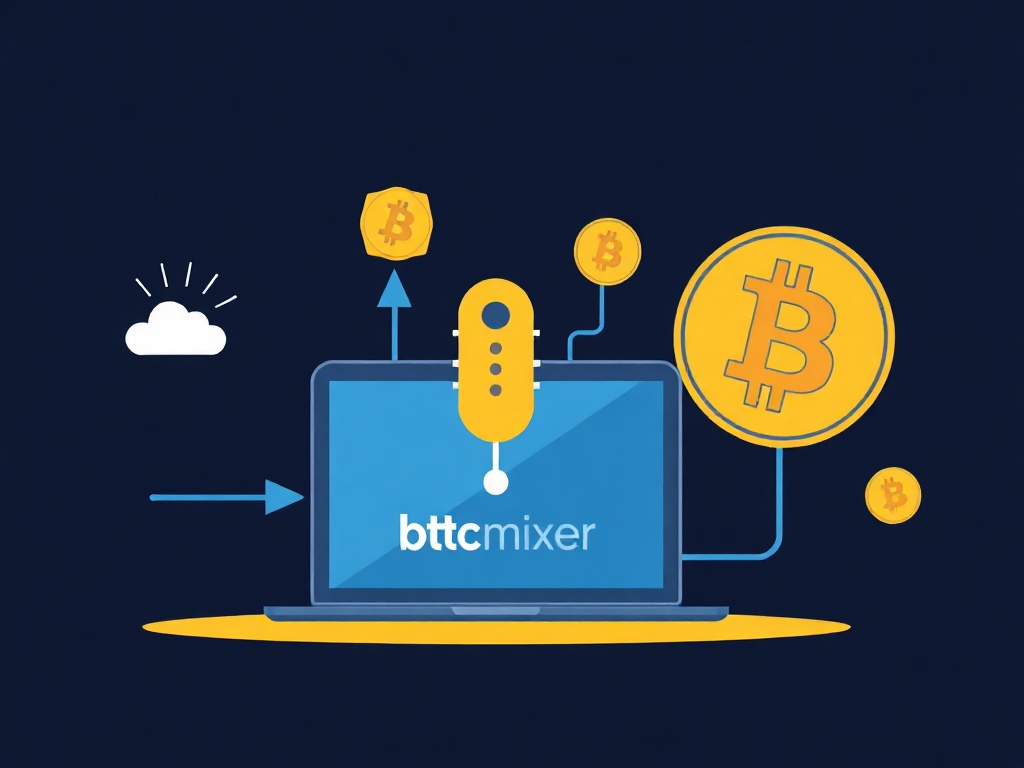
Mixers and tumblers are tools that obscure the transaction trail by pooling funds from multiple users and redistributing them. Popular privacy mixers in DeFi include:
- Tornado Cash: A non-custodial mixer that allows users to deposit and withdraw funds anonymously by breaking the on-chain link between sender and receiver.
- Wasabi Wallet: A Bitcoin mixer that can be used in conjunction with DeFi protocols to enhance privacy.
- Hop Protocol: A cross-chain liquidity protocol that uses privacy-preserving techniques to obscure transaction paths.
While mixers provide a straightforward way to enhance DeFi protocol confidentiality, they are not without risks. For example:
- Some mixers have been sanctioned or delisted due to regulatory concerns.
- Mixers can be exploited by malicious actors for money laundering or illicit activities, leading to increased scrutiny.
- Users must trust the mixer’s smart contracts, which may introduce centralization risks.
Despite these risks, mixers remain a popular choice for users seeking to enhance their privacy in DeFi.
3. Confidential DeFi Protocols
Several DeFi protocols are specifically designed to prioritize DeFi protocol confidentiality by incorporating privacy-enhancing features into their core architecture. Examples include:
- Secret Network: A blockchain that uses encrypted smart contracts to ensure data privacy while enabling DeFi applications like decentralized exchanges (DEXs) and lending platforms.
- Oasis Network: A privacy-focused blockchain that supports confidential smart contracts and data tokenization, allowing users to control access to their financial data.
- Manta Network: A privacy-preserving DeFi protocol that uses zk-SNARKs to enable private transactions and confidential asset swaps.
These protocols demonstrate that DeFi protocol confidentiality can be achieved without sacrificing the benefits of decentralization and composability. By integrating privacy at the protocol level, they provide a more robust and user-friendly alternative to traditional privacy tools.
4. Decentralized Identity Solutions
Decentralized identity (DID) solutions leverage blockchain technology to give users control over their personal data. In the context of DeFi protocol confidentiality, DID solutions can:
- Enable Selective Disclosure: Users can prove compliance with KYC/AML requirements without revealing their full identity.
- Prevent Sybil Attacks: By verifying identities on-chain, DID solutions can prevent users from creating multiple accounts to exploit DeFi protocols.
- Enhance Reputation Systems: Users can build a verifiable reputation history without exposing sensitive personal data.
Projects like Spruce ID, Disco, and BrightID are pioneering decentralized identity solutions that can complement DeFi protocol confidentiality efforts. By integrating DID with DeFi protocols, users can enjoy both privacy and compliance.
Best Practices for Maintaining DeFi Protocol Confidentiality
While technical solutions play a crucial role in enhancing DeFi protocol confidentiality, users must also adopt best practices to protect their privacy in DeFi. Here are some actionable tips:
1. Use Privacy-Focused Wallets
Not all wallets are created equal when it comes to privacy. Some wallets offer built-in privacy features, such as:
- CoinJoin: Wallets like Wasabi Wallet and Samourai Wallet support CoinJoin, a technique that mixes transactions to obscure their origin.
- Stealth Addresses: Wallets like Monero use stealth addresses to generate unique, one-time addresses for each transaction, enhancing privacy.
- Tor Integration: Some wallets, such as Electrum, support Tor, which routes transactions through the Tor network to hide users' IP addresses.
By using privacy-focused wallets, users can take the first step toward enhancing their DeFi protocol confidentiality.
2. Leverage Privacy-Enhancing Protocols
In addition to mixers and ZKPs, users can leverage other privacy-enhancing protocols to protect their financial activities:
- Lightning Network: For Bitcoin users, the Lightning Network enables fast and private off-chain transactions.
- AzTEC Protocol: A privacy-focused protocol that enables confidential transactions on Ethereum and other EVM-compatible chains.
- Findora: A blockchain that combines traditional finance with privacy-preserving DeFi solutions, using zero-knowledge proofs and other cryptographic techniques.
By integrating these protocols into their DeFi strategies, users can significantly improve their DeFi protocol confidentiality.
3. Practice Operational Security (OpSec)
Operational security is essential for maintaining privacy in DeFi. Users should adopt the following OpSec practices:
- Use Multiple Wallets: Avoid using a single wallet for all transactions. Instead, use separate wallets for different purposes (e.g., one for trading, another for long-term storage).
- Enable Two-Factor Authentication (2FA): Protect your accounts with 2FA to prevent unauthorized access.
- Avoid Publicly Linking Wallets: Do not associate your wallet addresses with your real-world identity on social media or public forums.
- Use VPNs and Proxies: Route your internet traffic through a VPN or proxy to hide your IP address and location.
- Regularly Update Software: Keep your wallets, browsers, and operating systems up to date to patch security vulnerabilities.
By following these OpSec practices, users can reduce the risk of exposing their financial activities and enhance their overall DeFi protocol confidentiality.
4. Stay Informed About Regulatory Developments
Regulatory changes can significantly impact DeFi protocol confidentiality. Users should stay informed about developments in:
- AML/KYC Laws: Understand how these laws apply to DeFi and what privacy tools are compliant.
- Data Protection Regulations: Familiarize yourself with laws like GDPR that govern the handling of personal data.
- Sanctions and Blacklists: Be aware of sanctioned addresses or protocols that may pose risks to your privacy.
By staying informed, users can make better decisions about which privacy tools and protocols to use while remaining compliant with relevant regulations.
The Future of DeFi Protocol Confidentiality
The future of DeFi protocol confidentiality is shaped by technological advancements, regulatory developments, and user demand for privacy. Several trends are likely to influence the evolution of privacy in DeFi:
1. Advancements in Zero-Knowledge Proofs
Zero-knowledge proofs are at the forefront of privacy innovation in DeFi. Future advancements in ZKP technology, such as:
- Recursive ZKPs: Enable the verification of multiple transactions in a single proof, improving scalability.
- ZK-Rollups: Layer-2 scaling solutions that use ZKPs to bundle transactions off-chain, reducing costs and enhancing privacy.
- ZK-Based Oracles: Privacy-preserving oracles that enable confidential data feeds for smart contracts.
These advancements will make DeFi protocol confidentiality more accessible and efficient, paving the way for broader adoption.
2. Integration of AI and Machine Learning
Artificial intelligence (AI) and machine learning (ML) can play a role in enhancing DeFi protocol confidentiality by:
- Detecting Anomalies: AI can identify suspicious transactions or patterns that may indicate privacy breaches or illicit activities.
- Optimizing Privacy Tools: ML algorithms can improve the efficiency of mixers, ZKPs, and other privacy-enhancing technologies.
- Personalizing Privacy Settings: AI-driven tools can adapt privacy settings based on users' risk profiles and preferences.
As AI and ML technologies mature, they will become valuable allies in the quest for robust DeFi protocol confidentiality.
3. Regulatory Clarity and Compliance Solutions
Regulatory clarity is essential for the widespread adoption of DeFi protocol confidentiality solutions. Future developments may include:
- Privacy-Preserving Compliance Tools: Solutions that enable users to comply with AML/KYC requirements without sacrificing privacy.
- Regulatory Sandboxes: Governments may create sandboxes to test privacy-focused DeFi protocols in a controlled environment.
- Global Standards: International collaboration on privacy and compliance standards for DeFi.
These developments will help bridge the gap between privacy and regulation, enabling users to enjoy the benefits of DeFi protocol confidentiality without legal risks.
4. The Rise of Privacy-First DeFi Ecosystems
As users become more privacy-conscious, we can expect the emergence of privacy-first DeFi ecosystems that prioritize confidentiality from the ground up. These ecosystems may feature:
- Privacy-Centric Blockchains: New blockchains designed specifically for confidential transactions and smart contracts.
- Interoperable Privacy Tools: Cross-chain privacy solutions that work
 James RichardsonSenior Crypto Market Analyst
Balancing Transparency and Privacy: The Critical Role of DeFi Protocol Confidentiality
As a Senior Crypto Market Analyst with over a decade of experience in digital asset research, I’ve observed that the tension between transparency and privacy in decentralized finance (DeFi) is one of the most pressing challenges facing the ecosystem today. DeFi protocol confidentiality isn’t just a technical consideration—it’s a fundamental requirement for institutional adoption, regulatory compliance, and user trust. While blockchain’s immutable ledger ensures auditability, the lack of privacy controls exposes sensitive financial data, trading strategies, and user identities to malicious actors and competitive risks. Protocols that prioritize confidentiality through zero-knowledge proofs (ZKPs), encrypted transactions, or selective disclosure mechanisms are poised to attract institutional players who demand both the benefits of DeFi and the privacy protections of traditional finance.
From a practical standpoint, the implementation of DeFi protocol confidentiality must be approached with caution. Overly restrictive privacy measures can undermine the very transparency that makes DeFi attractive to retail users and regulators alike. For instance, while ZK-rollups like zk-SNARKs offer strong privacy guarantees, they often come with high computational costs and complex integration hurdles. Protocols must strike a balance—ensuring confidentiality where necessary while maintaining the verifiability that prevents fraud and market manipulation. My research indicates that the most successful DeFi projects will be those that adopt modular privacy solutions, allowing users to opt into confidentiality features based on their needs rather than imposing blanket restrictions. Ultimately, DeFi protocol confidentiality is not a binary choice but a spectrum, and the protocols that navigate this spectrum effectively will define the next era of decentralized finance.