Understanding Zero Knowledge Proofs: The Future of Privacy in Bitcoin Mixing
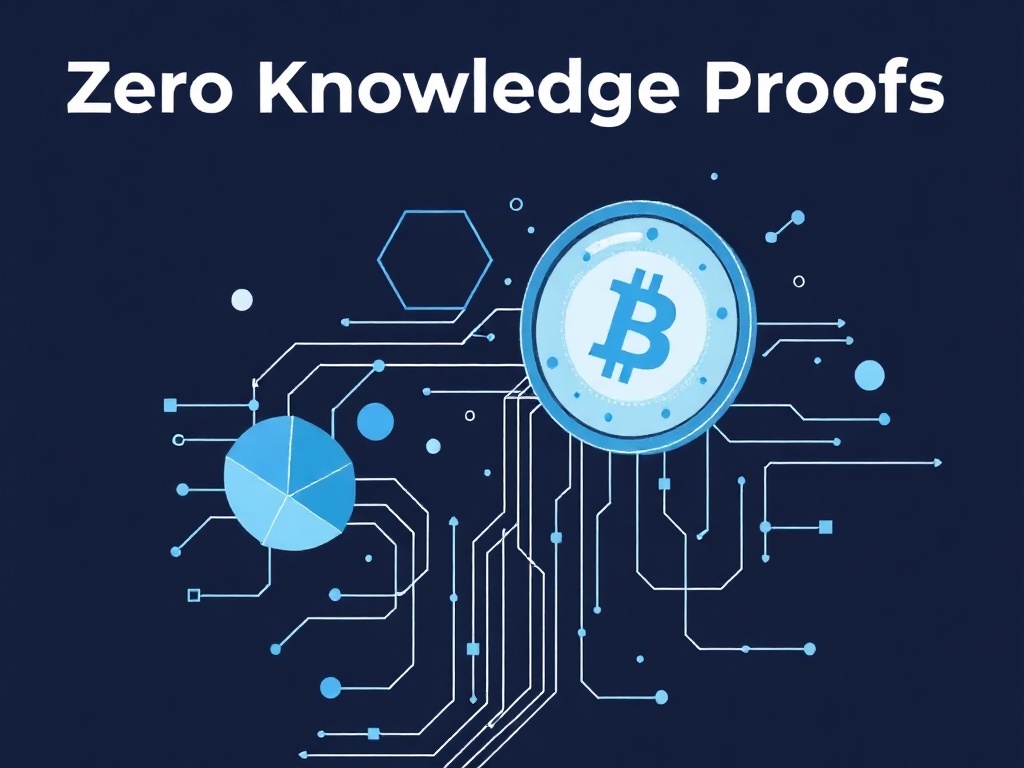
In the evolving landscape of cryptocurrency privacy, zero knowledge proofs (ZKPs) have emerged as a groundbreaking technology. These cryptographic tools allow one party to prove the validity of a statement without revealing any underlying information. For users of Bitcoin mixers—tools designed to obscure transaction trails—zero knowledge proofs represent a paradigm shift toward enhanced privacy and security. This article explores the fundamentals of zero knowledge proofs, their application in Bitcoin mixing, and their broader implications for the future of decentralized finance.
The Fundamentals of Zero Knowledge Proofs
What Are Zero Knowledge Proofs?
Zero knowledge proofs are a cryptographic method that enables a prover to convince a verifier of the truth of a statement without disclosing any additional information. The concept was first introduced in the 1980s by researchers Shafi Goldwasser, Silvio Micali, and Charles Rackoff. At its core, a zero knowledge proof satisfies three key properties:
- Completeness: If the statement is true, an honest prover can convince the verifier of its validity.
- Soundness: If the statement is false, a dishonest prover cannot trick the verifier into believing it is true.
- Zero-Knowledge: The verifier learns nothing about the statement beyond its validity.
These properties make zero knowledge proofs uniquely suited for privacy-preserving applications, including Bitcoin mixing.
How Zero Knowledge Proofs Work
The mechanics of zero knowledge proofs can be illustrated through a simple analogy: imagine proving you know the password to a vault without actually revealing the password itself. In cryptographic terms, this involves a series of interactions between a prover and a verifier, often using complex mathematical constructs such as elliptic curves or hash functions.
There are several types of zero knowledge proofs, including:
- Interactive ZKPs: Require real-time communication between the prover and verifier.
- Non-Interactive ZKPs (NIZKPs): Allow the prover to generate a proof that can be verified without further interaction.
- zk-SNARKs (Zero-Knowledge Succinct Non-Interactive Arguments of Knowledge): A specific type of NIZKP that is succinct (proofs are small and quick to verify) and widely used in blockchain applications.
- zk-STARKs (Zero-Knowledge Scalable Transparent Arguments of Knowledge): A newer variant that offers transparency and scalability without requiring a trusted setup.
Each type of zero knowledge proof has its advantages and trade-offs, making them suitable for different use cases in Bitcoin mixing and beyond.
Zero Knowledge Proofs in Bitcoin Mixing: Enhancing Privacy
The Role of Bitcoin Mixers
Bitcoin mixers, also known as tumblers, are services that combine multiple users' Bitcoin transactions to obscure their origin and destination. Traditional Bitcoin mixers rely on centralized servers, which can be vulnerable to hacks, censorship, or surveillance. Zero knowledge proofs offer a decentralized and more secure alternative by enabling users to prove the legitimacy of their transactions without revealing sensitive information.
How Zero Knowledge Proofs Improve Bitcoin Mixers
Zero knowledge proofs enhance Bitcoin mixers in several ways:
- Privacy Without Trust: Users can prove that their Bitcoin transactions are valid without revealing their addresses or transaction history. This eliminates the need to trust a centralized mixer with sensitive data.
- Decentralization: By leveraging zero knowledge proofs, Bitcoin mixers can operate in a trustless environment, reducing the risk of censorship or manipulation.
- Efficiency: Modern zero knowledge proofs like zk-SNARKs produce compact proofs that are quick to verify, making them ideal for high-throughput applications like Bitcoin mixing.
- Regulatory Compliance: While zero knowledge proofs enhance privacy, they can also be designed to comply with regulatory requirements, such as proving the source of funds without revealing the entire transaction history.
Real-World Examples of Zero Knowledge Proofs in Bitcoin Mixing
Several projects and protocols have begun integrating zero knowledge proofs into Bitcoin mixing services. One notable example is Tornado Cash, a decentralized mixer that uses zk-SNARKs to enable private transactions on Ethereum. While Tornado Cash is not Bitcoin-specific, its principles can be adapted for Bitcoin mixing. Another example is Wasabi Wallet, which employs CoinJoin—a technique that combines transactions from multiple users—to enhance privacy, though it does not yet use zero knowledge proofs directly.
As the technology matures, we can expect to see more Bitcoin mixers leveraging zero knowledge proofs to provide robust privacy solutions without compromising security or decentralization.
The Technical Underpinnings of Zero Knowledge Proofs
Cryptographic Foundations
Zero knowledge proofs rely on advanced cryptographic techniques, including:
- Elliptic Curve Cryptography (ECC): Used in zk-SNARKs to generate and verify proofs efficiently.
- Pairing-Based Cryptography: Enables the creation of succinct proofs by allowing computations over elliptic curves.
- Hash Functions: Used to create commitments and ensure the integrity of the proof.
- Polynomial Commitments: A method for committing to a polynomial in a way that allows efficient verification of evaluations.
These cryptographic tools work together to create proofs that are both secure and efficient, making zero knowledge proofs a viable solution for Bitcoin mixing.
The Trusted Setup Problem
One of the challenges associated with zero knowledge proofs, particularly zk-SNARKs, is the need for a trusted setup. This process involves generating a set of public parameters that must be destroyed after use to prevent the creation of fake proofs. While this is a significant hurdle, solutions like zk-STARKs and transparent setups are being developed to eliminate the need for trusted setups entirely.
For Bitcoin mixers, addressing the trusted setup problem is crucial to ensuring that the system remains decentralized and resistant to manipulation.
Performance and Scalability Considerations
While zero knowledge proofs offer significant privacy benefits, they also introduce computational overhead. Generating and verifying proofs can be resource-intensive, particularly for complex transactions. However, ongoing research and advancements in cryptographic techniques are improving the efficiency of zero knowledge proofs.
For Bitcoin mixers, scalability is a critical factor. Solutions like batch verification—where multiple proofs are verified simultaneously—can help reduce the computational burden and improve the overall performance of the system.
Challenges and Limitations of Zero Knowledge Proofs in Bitcoin Mixing
Adoption Barriers
Despite their potential, zero knowledge proofs face several adoption barriers in the context of Bitcoin mixing:
- Complexity: Implementing zero knowledge proofs requires a deep understanding of cryptography, which can be a barrier for developers and users alike.
- User Experience: Current implementations of zero knowledge proofs can be cumbersome for non-technical users, requiring additional steps to generate and verify proofs.
- Regulatory Uncertainty: While zero knowledge proofs can enhance privacy, they may also raise concerns among regulators who seek to prevent illicit activities such as money laundering.
Security Risks
Zero knowledge proofs are not without their security risks. Potential vulnerabilities include:
- Implementation Flaws: Bugs in the code can lead to vulnerabilities that undermine the security of the proof system.
- Quantum Attacks: While still theoretical, quantum computers could potentially break the cryptographic assumptions underlying zero knowledge proofs.
- Side-Channel Attacks: Attackers may exploit information leaked during the proof generation or verification process.
To mitigate these risks, rigorous auditing, formal verification, and continuous research are essential to ensure the robustness of zero knowledge proofs in Bitcoin mixing.
Balancing Privacy and Compliance
One of the most significant challenges for Bitcoin mixers using zero knowledge proofs is balancing privacy with regulatory compliance. While zero knowledge proofs allow users to prove the validity of their transactions without revealing sensitive information, they can also be used to obscure illicit activities. Regulators may require mixers to implement additional safeguards, such as:
- Know Your Customer (KYC) Requirements: Requiring users to verify their identity before using the mixer.
- Transaction Limits: Imposing caps on the amount of Bitcoin that can be mixed in a single transaction.
- Audit Trails: Maintaining logs of transactions for regulatory review while preserving user privacy.
Finding the right balance between privacy and compliance is an ongoing challenge for developers and regulators alike.
The Future of Zero Knowledge Proofs in Bitcoin Mixing
Emerging Trends and Innovations
The field of zero knowledge proofs is rapidly evolving, with several emerging trends that could shape the future of Bitcoin mixing:
- Post-Quantum Cryptography: Research into cryptographic techniques that are resistant to quantum attacks could make zero knowledge proofs more secure in the long term.
- Interoperability: Integrating zero knowledge proofs with other privacy-enhancing technologies, such as Confidential Transactions or Mimblewimble, could create even more robust privacy solutions.
- Layer 2 Solutions: Scaling solutions like the Lightning Network could benefit from zero knowledge proofs to enhance privacy while maintaining efficiency.
- Decentralized Identity: Combining zero knowledge proofs with decentralized identity solutions could enable users to prove their identity without revealing personal information.
The Role of Bitcoin Mixers in a Privacy-Focused Future
As privacy concerns continue to grow, Bitcoin mixers that leverage zero knowledge proofs are poised to play a crucial role in the future of decentralized finance. By enabling users to transact privately without sacrificing security or decentralization, these mixers can help preserve the fungibility of Bitcoin—a fundamental property that ensures each unit of Bitcoin is interchangeable with another.
Moreover, as governments and financial institutions increasingly scrutinize cryptocurrency transactions, the demand for privacy-preserving tools like Bitcoin mixers will only grow. Zero knowledge proofs provide a robust solution that aligns with the core principles of decentralization and user sovereignty.
Potential Challenges Ahead
Despite the promising future of zero knowledge proofs in Bitcoin mixing, several challenges remain:
- Regulatory Pressure: Governments may impose stricter regulations on privacy-enhancing technologies, potentially limiting their adoption.
- Technological Maturity: While zero knowledge proofs have made significant strides, they are still a relatively new technology that requires further refinement.
- User Education: Many users remain unaware of the benefits of zero knowledge proofs and how to use them effectively in Bitcoin mixing.
Addressing these challenges will require collaboration between developers, regulators, and the broader cryptocurrency community to ensure that zero knowledge proofs can fulfill their potential as a privacy-enhancing tool.
Practical Guide: Using Zero Knowledge Proofs for Bitcoin Mixing
Step-by-Step Process for Implementing ZKPs in Bitcoin Mixing
For developers and users interested in leveraging zero knowledge proofs for Bitcoin mixing, here’s a step-by-step guide to the process:
- Choose a ZKP Protocol: Select a suitable zero knowledge proof protocol, such as zk-SNARKs or zk-STARKs, based on your requirements for privacy, efficiency, and trust assumptions.
- Set Up the Cryptographic Environment: Install the necessary cryptographic libraries and tools, such as libsnark for zk-SNARKs or libstark for zk-STARKs.
- Define the Statement to Prove: Clearly define the statement that the prover needs to prove to the verifier. For Bitcoin mixing, this could involve proving that the transaction is valid without revealing the sender’s address.
- Generate the Proof: Use the chosen ZKP protocol to generate a proof that satisfies the statement. This involves creating a circuit that encodes the logic of the proof.
- Verify the Proof: The verifier checks the proof to ensure it is valid. If the proof is valid, the transaction is considered legitimate without revealing any additional information.
- Integrate with Bitcoin: Connect the ZKP system with the Bitcoin blockchain to enable private transactions. This may involve using smart contracts or other blockchain integrations.
- Test and Audit: Thoroughly test the system to identify and fix any vulnerabilities. Consider engaging third-party auditors to ensure the security of the implementation.
Tools and Libraries for Zero Knowledge Proofs
Several tools and libraries are available to help developers implement zero knowledge proofs in their projects:
- libsnark: A C++ library for zk-SNARKs, widely used in blockchain applications.
- libstark: A library for zk-STARKs, offering transparency and scalability.
- ZoKrates: A toolbox for zk-SNARKs on Ethereum, which can be adapted for Bitcoin.
- Bellman: A Rust library for zk-SNARKs, designed for performance and ease of use.
- Circom: A circuit compiler for zk-SNARKs, enabling developers to write custom logic for proofs.
These tools provide a foundation for building zero knowledge proofs into Bitcoin mixing applications, making it easier for developers to integrate privacy-enhancing features.
Best Practices for Secure Implementation
To ensure the security and effectiveness of zero knowledge proofs in Bitcoin mixing, follow these best practices:
- Use Audited Libraries: Always use well-audited and widely adopted libraries for generating and verifying proofs.
- Implement Proper Key Management: Securely manage cryptographic keys to prevent unauthorized access or tampering.
- Conduct Regular Audits: Perform regular security audits to identify and address potential vulnerabilities.
- Stay Updated on Cryptographic Advances: Keep abreast of the latest developments in cryptography to ensure your implementation remains secure against emerging threats.
- Educate Users: Provide clear documentation and user guides to help users understand how to use zero knowledge proofs effectively and securely.
Conclusion: The Path Forward for Zero Knowledge Proofs and Bitcoin Mixing
Zero knowledge proofs represent a transformative technology for Bitcoin mixing, offering a powerful tool for enhancing privacy without compromising security or decentralization. As the cryptocurrency ecosystem continues to evolve, the integration of zero knowledge proofs into Bitcoin mixers will play a pivotal role in preserving the fungibility and privacy of Bitcoin transactions.
While challenges remain—such as regulatory scrutiny, technological complexity, and adoption barriers—the potential of zero knowledge proofs is undeniable. By fostering innovation, collaboration, and education, the cryptocurrency community can unlock the full potential of zero knowledge proofs and pave the way for a more private and secure financial future.
For users and developers alike, understanding the principles and applications of zero knowledge proofs is essential to navigating the complex landscape of Bitcoin privacy. As this technology matures, it will undoubtedly shape the future of decentralized finance, enabling users to transact with confidence and privacy in an increasingly transparent world.

Zero Knowledge Proofs: The Next Frontier in Trustless Privacy and Scalability
As the Blockchain Research Director at a leading fintech innovation lab, I’ve spent years dissecting the architectural trade-offs between transparency and privacy in distributed systems. Zero knowledge proofs (ZKPs) represent one of the most transformative cryptographic primitives to emerge since the inception of blockchain. Unlike traditional consensus mechanisms that rely on visible transaction data, ZKPs enable verification of computational integrity without revealing underlying inputs—this is not just theoretical elegance; it’s a practical necessity for institutions navigating regulatory scrutiny while maintaining operational confidentiality. In my work with cross-chain protocols, I’ve observed firsthand how ZKPs reduce settlement latency by orders of magnitude compared to legacy systems, all while preserving auditability. The real-world impact? Financial institutions can now execute private smart contracts on public chains without exposing sensitive client data to competitors or malicious actors.
However, the adoption curve for zero knowledge proofs is not without friction. The computational overhead of generating and verifying proofs remains a bottleneck, particularly for resource-constrained environments like mobile devices or IoT networks. From a security perspective, the reliance on trusted setups in some ZKP variants introduces centralization risks that contradict the decentralized ethos of blockchain. My team’s research has shown that hybrid models—combining ZKPs with optimistic rollups—can mitigate these challenges by offloading heavy computation to layer-2 solutions while maintaining fraud-proof guarantees. For enterprises considering ZKP integration, the key is aligning technical feasibility with business objectives: Are you prioritizing regulatory compliance, cost efficiency, or user experience? The answer will dictate whether you deploy zk-SNARKs, zk-STARKs, or a custom variant. One thing is certain—zero knowledge proofs are no longer a niche academic curiosity; they are the backbone of the next generation of scalable, privacy-preserving blockchain infrastructure.