Why You Should Not Spend Attacker Sent Dust: Protecting Your Crypto Privacy and Security
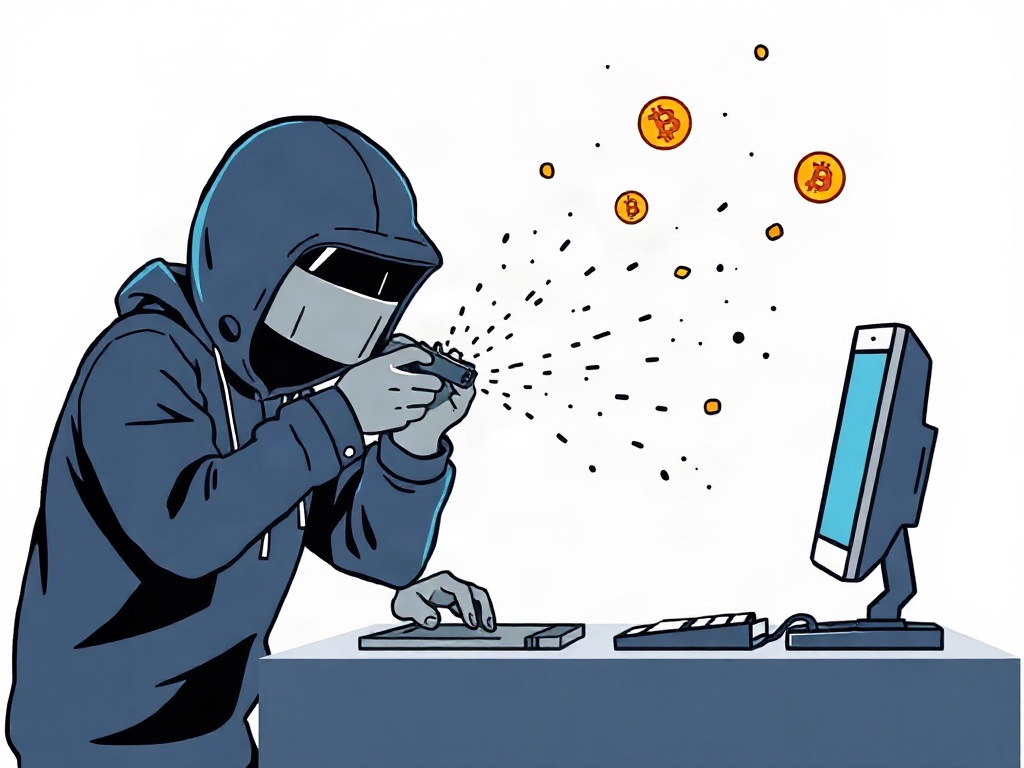
Understanding Dusting Attacks in the Crypto Ecosystem
What Is "Dust" in Bitcoin and Cryptocurrency?
In the world of blockchain and digital assets, "dust" refers to minuscule amounts of cryptocurrency that are typically left over from transactions or deliberately sent to numerous addresses. These amounts are often so small that they are below the threshold required for practical spending, especially when factoring in transaction fees. However, dust has become a strategic tool in the hands of malicious actors. When you encounter dust in your wallet, it isn't merely leftover change; in many cases, it is the first stage of a coordinated dusting attack designed to erode your privacy and potentially compromise your financial security. Understanding what dust is forms the foundation for recognizing why you should not spend attacker sent dust under any circumstantial convenience.How Attackers Use Dust to Compromise Privacy
Attackers exploit the transparent nature of most blockchains by sending tiny amounts of cryptocurrency to a vast number of addresses, including those belonging to unsuspecting users. The moment you spend or consolidate this dust, you inadvertently create a on-chain link between your various addresses. Because all transactions are publicly recorded, these links allow adversaries to map out your address network, deanonymize your holdings, and correlate your activity across different services. The sophistication of these attacks lies in their subtlety; users often mistake dust for airdrops, bonuses, or negligible change, spending it without a second thought. This is precisely why the warning why you should not spend attacker sent dust exists—to prevent accidental self-surveillance on the public ledger.The Risks of Spending Attacker-Originated Dust
Transaction Graph Analysis and Address Linking
Blockchain analysis firms and sophisticated adversaries employ advanced graph theory to visualize how funds move across addresses. When dust is spent, it becomes a node in your transaction graph, connecting previously unrelated addresses through a common input. This connection can reveal the total balance of your portfolio, your spending habits, and even your identity if any of your addresses are linked to real-world entities. The implications are profound: a single careless spend of attacker sent dust can unravel years of careful privacy management, exposing your entire financial footprint to anyone capable of reading the blockchain.Potential for Phishing and Social Engineering
Beyond mere address linking, dust attacks often serve as a prelude to more targeted phishing campaigns. Attackers may use the dust transaction as a signal that an address is active and owned by a real person. Subsequently, they may craft personalized messages referencing the specific cryptocurrency or amount received, increasing the likelihood of deception. In some cases, the dust itself may contain a memo or link that, when clicked during a spend transaction, directs the user to a malicious site designed to steal private keys or seed phrases. The psychological engineering behind these attacks preys on curiosity and the desire to "cash in" even the smallest amounts, making the directive why you should not spend attacker sent dust a critical security practice.The btcmixer_en2 Context and Dust Management
How Mixers Interact with Dust and Privacy Protections
Bitcoin mixers, such as those associated with the btcmixer_en2 niche, are often sought after by users aiming to obfuscate their transaction history. However, mixing services are not immune to the dusting threat. If a user consolidates attacker-originated dust before feeding funds into a mixer, the malicious links created by the dust can persist through the mixing process, potentially undermining the privacy guarantees the service promises. Some mixers have implemented internal dust filtering or user education protocols, but the onus remains on the individual to preemptively identify and isolate suspicious inputs. This intersection highlights why you should not spend attacker sent dust before engaging with any privacy-enhancing tool, as the foundational cleanliness of your UTXO set directly impacts the efficacy of mixing.
Best Practices When Using Mixers with Small Incoming Amounts
When utilizing a mixer or any custodial/non-custodial service, users should adopt a zero-tolerance policy for unknown dust. Many modern wallets now offer automatic dust filtering or consolidation features that move these outputs to a change address or a designated "dust box" that is never spent. Additionally, users can employ techniques such as CoinJoin or Pay-to-End-Point (P2EP) protocols, which inherently resist dust-based deanomalization by aggregating multiple users' inputs into a single transaction without revealing individual source addresses. Educating oneself on these methods, and rigorously applying them, ensures that the privacy benefits of services like btcmixer_en2 are not nullified by a single overlooked dust output.
Safe Alternatives and Mitigation Strategies
Tools and Wallets That Filter Dust
The cryptocurrency ecosystem has responded to the dusting threat with a variety of tools designed to protect users automatically. Privacy-focused wallets such as Wasabi Wallet, Samourai Wallet, and Sparrow Wallet incorporate features like "Input Shuffling" and "Dust Filtering" that prevent users from inadvertently spending attacker-originated small amounts. These wallets label suspicious inputs and provide clear warnings before any transaction is broadcast. Furthermore, some decentralized exchanges and aggregators have integrated dust detection APIs that alert users at the point of deposit or withdrawal. Leveraging these technologies is a proactive step toward safeguarding your assets and aligns with the core principle why you should not spend attacker sent dust without thorough verification.
Steps to Take if You Receive Suspicious Dust
Discovering dust in your wallet can be unsettling, but the appropriate response is straightforward and decisive. First, refrain from spending the output; any attempt to consolidate it will embed the tracking link into your blockchain history. Second, utilize your wallet's built-in tools to either label the output as "do not spend" or consolidate it into a separate, isolated address that you control but never interact with for regular transactions. Third, consider performing a privacy audit of your entire address set, using block explorers or analytics tools to review recent inbound transactions for patterns consistent with dusting campaigns. By following these steps, you maintain the integrity of your transaction graph and reinforce the security mindset encapsulated in why you should not spend attacker sent dust.
Long-Term Privacy Hygiene and Community Awareness
Building a Dust-Resistant Transaction Workflow
Achieving robust on-chain privacy requires more than one-off precautions; it demands a sustained workflow that treats every incoming satoshi with scrutiny. Users should adopt habits such as regularly auditing their UTXO set, using hierarchical deterministic (HD) wallets with frequent address rotation, and avoiding the consolidation of funds from untrusted sources. Additionally, enabling features like Tor or VPN integration when broadcasting transactions can add layers of network-level anonymity, making it harder for adversaries to correlate dust spends with real-world identities. This holistic approach to privacy hygiene ensures that the lesson embedded in why you should not spend attacker sent dust becomes a permanent part of your cryptocurrency operational culture.
 James Richardson
Senior Crypto Market Analyst
why you should not spend attacker sent dust: A Senior Crypto Market Analyst's Perspective
Having spent more than twelve years dissecting cryptocurrency market dynamics and blockchain risk profiles, I've observed that the arrival of unsolicited token deposits—often labeled as "dust"—is more than a mere curiosity; it's a deliberate vector in the attacker's playbook. The immediate urge to consolidate or spend these funds can seem pragmatic, yet it runs counter to the disciplined risk assessment frameworks that underpin sustainable crypto exposure.
From a practical standpoint, leaving attacker-sent dust untouched preserves its utility as on-chain intelligence. These minute allocations serve as free-range markers, allowing analysts to trace attacker infrastructure, identify phishing clusters, and issue timely warnings to the broader ecosystem. Spending the dust not only erases this forensic signal but can also inadvertently validate the attacker's address list, expanding their reach rather than containing it.
For institutional participants and serious market operators, the decision to quarantine such inputs reflects a broader commitment to operational hygiene and model purity. By treating these deposits as noise to be documented but not engaged, we maintain cleaner valuation baselines and reduce the probability of accidental compliance triggers. In my professional view, the most strategic move is to log, isolate, and ultimately exclude attacker-sent dust from active wallet management until its provenance is unequivocally verified.